

To define detail, scope and purpose.
To establish the developed detail in a viewable format to facilitate information.
To facilitate the application of the documentation.
Downloading a resource will add this resource to your resource subscriptions. You will be notified of future updates to this resource via email (you may unsubscribe at any time by clicking the unsubscribe link in the email notification, or to unsubscribe immediately from all update notifications, click here)
Downloading a resource will add this resource to your resource subscriptions. You will be notified of future updates to this resource via email (you may unsubscribe at any time by clicking the unsubscribe link in the email notification, or to unsubscribe immediately from all update notifications, click here)
This information can be used to develop food safety and quality programs that meet the requirements of modern Regulatory, Customer and Industry Standards:
When considering the development, documentation, and implementation of Catering and Food Service Standards within food safety and quality management systems, the following information should be considered to ensure effective outcomes:
Catering and Food Service businesses are generally required to meet the same regulatory standards as other food businesses within any given region, though some requirements are applied differently due to the ‘just in time’ and ‘ready to consume’ status of foodstuffs offered as Catering and Food Service products. Industry and Customer Standards may also apply in the same way as they do to other food businesses.
Key elements of food compliance for Catering and Food Service businesses are identified below, including:
Some jurisdictions may class Catering and Food Service businesses as Food Retailers where they are supplying customers and/or consumers directly. In such cases, some (or all) requirements for Catering and Food Service businesses may also apply to the Food Retail business.
Further information regarding Food Retail Standards can be found within the haccp.com Food Retail Standards Food Standard Element.

Catering and Food Service businesses may be allocated to different classes of food businesses within their operational jurisdictions. Common classes include:
Food Safety Program requirements may differ within some jurisdictions based upon the ‘class’ allocated. Some Catering and Food Service businesses may also be classed as ‘Retail’ businesses within some jurisdictions.

Vulnerable populations have heightened susceptibility to foodborne illness, so the Food Safety Controls for related Catering and Food Service operations require additional attention to detail. Vulnerable populations may include:
Within some jurisdictions, enhanced Food Safety Controls are required for participants in the Catering and Food Service sector, particularly those operating within the following sectors:
The key considerations for Catering and Food Service Standards for Vulnerable Populations (above and beyond base level Food Compliance Requirements) include:
You need to be aware of any specific Compliance Requirements, Regulations, or Licensing for Catering and Food Service Standards for Vulnerable Populations within your regions of operation.
Every time a consumer eats, they rely on many stages of the food supply chain to ensure that their food is safe and of acceptable quality. The food supply chain commonly begins in the paddock and progresses through preparation, packing, warehousing, distribution, processing, presentation, and service. Every part of the supply chain must take responsibility for controlling potential hazards that may render foods unsafe or unsuitable for consumers. Most foodborne illness incidents result from a lack of control of hazards during one or more stages of the paddock to plate food chain.
Food Safety Management Systems are an essential component of all food businesses and their suppliers, and in many jurisdictions they are required by law. A well-managed Food Safety Management System need not be complex, expensive, or time-consuming. The foundation of any system is a commitment to science-based hazard analysis, identification, and control, supported by the elements common to any quality management system: Policy, Structure, Training, Awareness, Responsibility, Communication, Documentation, and Verification.
Accountability for food safety and quality is shared by everyone involved in the paddock to plate food chain, and blame should not automatically be placed on the previous step in the supply chain. Hazards can be introduced by people who never handle food directly, such as a housekeeper who folds napkins with unwashed hands, a kitchen worker who wipes a soiled bench and then a plate with the same cloth, a team member with an unreported communicable illness, a supervisor who ignores temperature fluctuations in a chiller, or a waiter who blows dust from a butter pot before filling it. Everyone involved is accountable for food safety within the business.
Further information regarding Food Safety Management can be found within the haccp.com Food Safety Management Food Standard Element.
A Food Safety Management System is a set of developed, documented, implemented, monitored, verified, and validated procedures for the production of safe food, often supported by structured prerequisite programs. There is no precise template for any food industry sector because each food business is different. A science-based approach such as HACCP identifies and controls potential hazards, and the system must be tailored to the specific operation so that those hazards are addressed.
A successful system has many elements, all of which are necessary to produce safe food and to demonstrate due diligence in doing so. Everyone involved with the business, from paddock to plate, needs to understand their roles, responsibilities, and accountabilities within the system and take a proactive part in it.
The following elements are considered essential to any Food Safety Management System:
The primary objective of the Food Safety Management System should be stated within its scope and purpose: to maintain status as a producer of safe foodstuffs and to exceed consumer expectations regarding food safety.
Specific requirements for any Catering and Food Service Food Safety Program will be defined by the relevant Regulatory Authority. In some cases, Food Safety Program requirements may also be mandated as part of Industry and/or Customer Standards.
The following Food Standard Elements are generally relevant to Catering and Food Service businesses (and the scope of related Food Safety Programs):
Further information regarding all of these Food Standard Elements can be found at haccp.com.
Food Compliance Culture is the cumulative outcome of human beliefs and behaviours within a food business and the meaning people attach to those beliefs and behaviours. It determines how different levels of staff communicate with one another and how employees deal with clients and customers.
The methods for implementing and managing a strong Food Compliance Culture vary from business to business and site to site, so it is difficult to ‘measure’ levels of Food Compliance Culture within any given organisation.
Further information regarding Food Compliance Culture can be found within the haccp.com Food Compliance Culture Standard Element.

Food allergens affect a relatively small percentage of the population but can be life-threatening under certain circumstances. Allergens are contained within many foods and food ingredients, but they can also be introduced into foods through inappropriate production scheduling, raw material contamination, ineffective identification and traceability of raw materials, products, and work in progress, and ineffective cleaning and sanitation programs. Allergen management programs should control and manage the use of allergenic materials, production processes, and prerequisite programs within the food business.
Historically, food safety and quality management systems used ‘cross contamination’ to describe allergen interactions. Contemporary systems use the term ‘cross contact’, which describes the unintentional transfer of an allergen from one food, surface, or piece of equipment to another food that does not contain it as an ingredient. Even a very small amount of an allergen can cause a reaction in a sensitive person, so Catering and Food Service businesses should prevent cross contact through scheduling, segregation, dedicated utensils, cleaning, and clear communication with customers.
Further information regarding Allergen Management can be found within the haccp.com Allergen Management Food Standard Element.
Menus for Catering and Food Service businesses should be planned with food safety and allergen control in mind. Menu planning decisions influence which hazards must be managed, how food is prepared and held, and which customers can be served safely.
Menu planning should consider:
Accurate allergen information must be available to customers and consumers before they order, in the form required within your jurisdiction. This may include menu declarations, allergen matrices, labels on packaged meals, or verbal advice from trained staff supported by written records. Staff should know how to find reliable allergen information and must never guess. Further information regarding allergens can be found within the haccp.com Allergen Management Food Standard Element.

Ready to Consume foods are not usually subject to a further kill step by the consumer, so temperature control is one of the most important food safety controls for Catering and Food Service businesses. Potentially Hazardous Food should be kept out of the temperature range in which pathogenic microorganisms grow, and for as little time as possible within it.
Many jurisdictions nominate cold storage at 5°C (41°F) or below and hot holding at 60°C (140°F) or above, but some use different limits, so confirm the requirements that apply to your business. Temperature controls commonly apply to:
Temperatures should be measured with calibrated probe thermometers and recorded, with corrective action where limits are not met. Further information can be found within the haccp.com Calibration of Measuring and Testing Equipment and Storage and Handling Requirements Food Standard Elements.

Off-site and event catering adds risks that do not apply in a permanent kitchen. Food is often prepared in advance, transported, and served in temporary or unfamiliar environments, sometimes with limited access to refrigeration, hot water, handwashing facilities, and cleaning equipment.
Planning for off-site and event catering should consider:
Further information can be found within the haccp.com Transport Standards Food Standard Element.
Some jurisdictions require Catering and Food Service businesses to nominate a Food Safety Supervisor (or similarly titled position), who is specially trained and accepts responsibility for the Food Safety Program and related Food Safety Compliance outcomes. Requirements differ between countries and regions and depend on the type of business and the food it handles.
Your Catering and Food Service business must meet any specific requirements for Food Safety Supervision (and related Licensing) within the jurisdictions in which it operates.
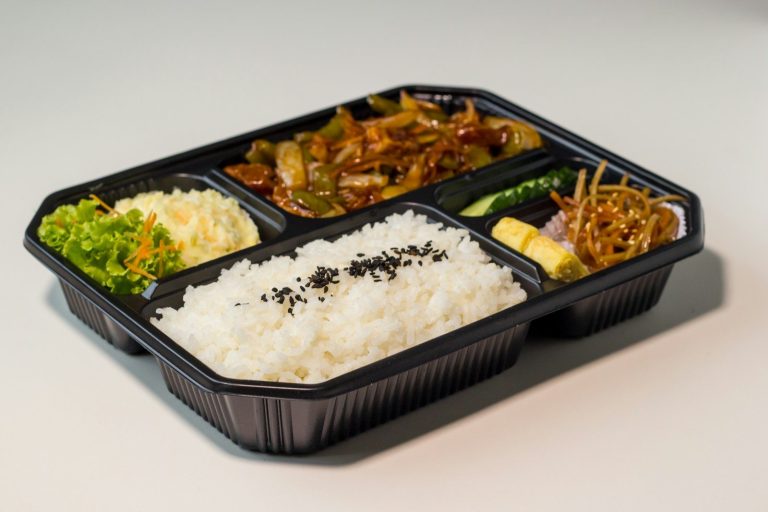
Packaging assists in the preservation of food, keeps food safe from contamination and damage, and provides an opportunity for marketing branded food products. Packaging design and materials should provide adequate protection for products to minimise contamination, prevent damage, and accommodate appropriate labelling. Any packaging materials or gases used must be non-toxic and must not threaten the safety and suitability of food under the specified conditions of storage and use. Where appropriate, reusable or convenience packaging should be suitably durable and easy to clean and sanitise.
Packaging Standards procedures should ensure that packaging conforms to relevant specifications, which may be based upon regulatory or industry guidelines or customer requirements. Packaging materials and procedures must not affect the safety or quality of the foods being packaged. Unused packaging should be handled and stored in a manner that does not compromise food safety or quality.
The materials used for food packaging are many and varied, including:
The suitability of packaging for a particular food item depends on the food’s composition and the intended purpose of the packaging. This is an important consideration for the use of recycled materials in food packaging, which may also be subject to legislative requirements. Modern technology offers a wide range of packaging options that support food safety and quality of the highest calibre, whilst allowing increased accessibility and marketability for branded products.
Further information regarding Packaging Standards can be found within the haccp.com Packaging Standards Food Standard Element.
Labelling gives consumers the information they need to handle, store, and consume food safely, and to avoid foods that may harm them. Labelling requirements for food prepared and sold by Catering and Food Service businesses vary between jurisdictions and between types of sale, so you must confirm which requirements apply to your products.
Labelling for packaged Catering and Food Service products commonly includes:
Labelling Standards procedures should ensure that labels are accurate, legible, and reviewed whenever a recipe, ingredient, or supplier changes. Further information regarding Labelling Standards can be found within the haccp.com Labelling Standards Food Standard Element.
If your food business supplies foodstuffs manufactured to a customer’s specifications, it is important to consider any specific Catering and Food Service Standards Development requirements in relation to their items.
Document: A document provides guidance and/or direction for performing work, making decisions, or rendering judgments that affect the safety or quality of the products or services that customers receive.
Documented policies, procedures, work instructions, and schedules form the basis of any food safety and quality management system. The following documentation formats may be considered to ensure ongoing compliance with specified requirements for Catering and Food Service Standards:
If your food business supplies foodstuffs manufactured to a customer’s specifications, it is important to consider any specific Catering and Food Service Standards Documentation requirements in relation to their items.
You may wish to visit the Catering and Food Service Standards Templates section of haccp.com for examples of Catering and Food Service Standards documentation, record and resource formats commonly applied within food safety and quality systems.
Implementation: Implementation is the application of documented food safety and quality system elements into the actual business operation.
The implementation of Catering and Food Service Standards within any food business requires genuine commitment from senior management, staff, and visitors to ensure the nominated goals of implementation are achievable on an ongoing basis. It is a step that requires significant planning and consideration of general and specific food business circumstances to ensure the outcomes of Catering and Food Service Standards do not negatively impact the safety and quality of the food items dispatched from the business.
Implementation of Catering and Food Service Standards must include a clear definition of responsibilities and authorities for all levels of participation by senior management, staff, and visitors to the site.
When implementing Catering and Food Service Standards within a food safety and quality system, you may wish to consider the following requirements before completion:
If your food business supplies foodstuffs manufactured to a customer’s specifications, it is important to consider any specific Catering and Food Service Standards Implementation requirements in relation to their items.
Monitoring: Monitoring is the act of reviewing and confirming measurable parameters of a defined process or product status.
Monitoring requirements within food industry sectors are generally identified against limits of acceptability defined within HACCP plans, implementation procedures, and work instructions. Monitoring usually includes some element of record-keeping, which may be maintained manually or through digital systems. Advancements in technology have produced many systems and processes that are self-monitored or self-adjusted when variances are identified. Regardless of the system used, the goal of any monitoring activity is to provide sufficient evidence that any limit of acceptability has been met.
Traditional Catering and Food Service Standards monitoring requirements include manual recording and the application of corrective actions when the results of monitoring are found to be outside acceptable limits. Corrective Actions should also generally be strongly linked to the monitoring process where applied to ensure full traceability of the applied actions.
Common monitoring activities and record formats may apply to Catering and Food Service Standards:
If your food business supplies foodstuffs manufactured to a customer’s specifications, it is important to consider any specific Catering and Food Service Standards Monitoring requirements in relation to their items.
You may wish to visit the Catering and Food Service Standards Templates section of haccp.com for examples of Catering and Food Service Standards documentation, record and resource formats commonly applied within food safety and quality systems.
Corrective Action: Corrective action is mandatory action to be taken when a deviation to the Quality System occurs, particularly in relation to a Critical Control Point.
Preventative Action: At any step in the process where a hazard has been identified, preventative action must be put into place to prevent re-occurrence.
Corrective Action and Preventative Action are implemented to ensure that any identified non-conformance issues are documented, investigated, and rectified within appropriate time frames. Corrective action is any action applied to regain control over a product, process, policy, or procedure that has been identified as being non-conforming or outside nominated limits of acceptability. Preventative action is any action applied to prevent any identified non-conformance from reoccurring.
The outcomes of corrective and preventative actions should result in regained process control after effective application. Specified corrective actions are commonly linked to the HACCP plan and the food business certification process.
Below are Corrective Action and Preventative Action examples which may be associated with Catering and Food Service Standards related non-conformance:
If your food business supplies foodstuffs manufactured to a customer’s specifications, it is important to consider any specific Catering and Food Service Standards Corrective Action requirements in relation to their items.
You may wish to visit the Corrective Action and Preventative Action section of haccp.com for examples of best practice applications for this food safety and quality system element.
Verification: The act of reviewing, inspecting, testing, checking, auditing, or otherwise establishing and documenting whether items, processes, services, or documents conform to specified requirements.
Verification is the detailed review of all food safety and quality system elements to confirm that they are effectively developed, documented, implemented, monitored, and reviewed. All food safety and quality system elements, including documented policies, procedures, training, HACCP plans, and their operational applications, should be verified on an ongoing scheduled basis. The verification process commonly includes a defined schedule for which verification activities are required, how often they are conducted, who is responsible, and detailed documented procedures for each nominated verification activity.
The general goal of an established verification process is to ensure any systemic non-conformance issues are identified and rectified within an appropriate time frame. When non-conformance issues are identified through the verification process, Corrective Actions and Preventative Actions should be implemented to ensure they do not impact the effectiveness of the food safety and quality system.
The following examples of verification activities may apply to Catering and Food Service Standards:
If your food business supplies foodstuffs manufactured to a customer’s specifications, it is important to consider any specific Catering and Food Service Standards Verification requirements in relation to their items.
You may wish to visit the Verification Activities section of haccp.com for examples of best practice applications for this food safety and quality system element.
Validation: The process of gathering evidence to provide a scientific basis for the documented act of demonstrating that a procedure, process, and activity will consistently lead to the expected results. It often includes the qualification of systems and equipment.
Validation is the provision of evidence to support the limits of control or acceptability for food safety or quality parameters nominated within systemic elements. Limits of control or acceptability are commonly included within documented food safety and quality system elements such as procedures, HACCP plans, and specifications.
Common sources of validation include regulatory and legislative standards, finished product specifications and customer requirements, industry codes of practice and guidelines, verified and validated research, historical product, and process control outcomes, and analytical testing.
The general goal of an established validation process is to ensure any systemic non-conformance issues are identified and rectified within an appropriate time frame. When non-conformance issues are identified through the validation process, Corrective Actions and Preventative Actions should be implemented to ensure they do not impact the effectiveness of the food safety and quality system.
Validation activities are commonly defined within the verification schedules and procedures of established food safety and quality management systems.
The following examples may apply to validation of the limits of control or acceptability for Catering and Food Service Standards:
If your food business supplies foodstuffs manufactured to a customer’s specifications, it is important to consider any specific Catering and Food Service Standards Validation requirements in relation to their items.
You may wish to visit the Validation Activities section of haccp.com for examples of best practice applications for this food safety and quality system element.
Skills and Knowledge: Skills and knowledge are attributes of human interactions commonly linked to competency within any specific job-related task.
Training and competency requirements for Catering and Food Service Standards must be ongoing, including regular scheduled reviews to ensure the effectiveness of training and competency outcomes.
Team members who have defined responsibilities regarding Catering and Food Service Standards should have knowledge including:
Team members who have defined responsibilities regarding Catering and Food Service Standards should have skills including:
Team members who have defined responsibilities regarding Catering and Food Service Standards should have access to resources including:
If your food business supplies foodstuffs manufactured to a customer’s specifications, it is important to consider any specific Catering and Food Service Standards Training, Competency, and Resources requirements in relation to their items.
You may wish to visit the Training, Competency, and Resources section of haccp.com for examples of best practice applications for this food safety and quality system element.