Product Assessment and Testing

Planning, Conducting, Recording and Reviewing Product Assessment and Testing Activities

Last updated: 16/Oct/2026Download this page (PDF)Share this: fXin✉
In this guide
This guide breaks the subject down across the eight Food Safety & Quality system elements below — Development, Documentation, Implementation, Monitoring, Corrective & Preventative Action, Verification, Validation and Training. Select any element to explore detailed, best-practice guidance.

Premium Resources

Download our Premium Product Assessment and Testing Resources

LOAD ALL

Downloading a resource will add this resource to your resource subscriptions. You will be notified of future updates to this resource via email (you may unsubscribe at any time by clicking the unsubscribe link in the email notification, or to unsubscribe immediately from all update notifications, click here)

To define detail, scope and purpose.

Development

This information can be used to develop food safety and quality programs that meet the requirements of modern Regulatory, Customer and Industry Standards:

  • We take the time to explain the expectations and requirements of food safety and quality compliance as these relate to your food safety and quality programs.
  • You may choose to use our Premium Resources to build, enhance or upgrade your food safety and quality program.
  • We encourage you to share this webpage with any food compliance associates and peers you believe may benefit from our commitment to providing our users with user-friendly information and resources to achieve superior Food Compliance Culture.
  • We welcome your suggestions for additions of general or specific content through the haccp.com Contact Page.

Key Definitions for Product Assessment and Testing

  • Analytical Testing: The process of assessing and evaluating the composition of a sample item using descriptive criteria including microbiological, chemical, and physical parameters.
  • Certificate of Analysis: A document issued by a laboratory or supplier that reports the test results for a specific batch or lot of product against its specification.
  • Good Laboratory Practices or GLP: Practices adopted to ensure appropriate levels of control are achieved within a laboratory environment.
  • ISO/IEC 17025: A global standard, published jointly by the International Organization for Standardization and the International Electrotechnical Commission, for the technical competence of calibration and testing laboratories.
  • Organoleptic: Refers to the properties that can be perceived by the senses, for example colour, texture, flavour, and aroma.
  • pH: A measure, on a scale from 0 to 14, of the acidity or alkalinity of a solution. A pH of 7 is neutral, a pH below 7 is acidic, and a pH above 7 is alkaline.
  • Product Assessment: The comparison of the physical and organoleptic parameters of a product against its specification.
  • Product Testing: The systematic gathering, recording, and analysis of data regarding a food item.
  • Retention Sample: A sample of a product batch or lot that is kept, under defined storage conditions, for a nominated period to allow later assessment or testing.
  • Sampling Plan: A documented plan that defines how many samples are taken, from where, how often, and how they are identified, handled, and tested.
  • Shelf Life: The period during which a product remains safe and continues to meet its specified quality criteria when stored under nominated conditions.
  • Specification: A specification is an explicit set of requirements to be satisfied by a material, product, or service. Should a material, product, or service fail to meet one or more of the applicable specifications, it may be referred to as being out of specification.

Product Assessment and Testing Development

When considering the development, documentation, and implementation of Product Assessment and Testing within food safety and quality management systems, the following information should be considered to ensure effective outcomes:

About Product Assessment and Testing

Finished product samples must be assessed and tested against the criteria included within the finished product specifications and regulatory requirements to ensure ongoing compliance. The criteria for such assessment and testing may include food safety, food quality, and regulatory parameters.

Product assessment and testing are conducted to confirm that products meet their intended specifications. Whether the specification criteria being tested is from a customer specification or a regulatory standard, the outcomes of the Product Assessment and Testing process must provide evidence that the product is appropriate.

As every food product is different, so are the methods and procedures for Product Assessment and Testing. The differences between product assessment and product testing are defined as follows:

  • Product testing is the confirmation of product parameters such as microbiological or chemical attributes through analytical methods. Product testing is often referred to as Analytical testing;
  • Product assessment is generally the comparison of physical or organoleptic parameters defined within the finished product specifications. It is common for results from product testing to be used within the product assessment process as references for microbiological or chemical attributes.

Further information on regulatory requirements can be found within the haccp.com HACCP: Regulatory Hazards Management Food Standard Element.

It is important to consider that some analytical testing methods are defined by regulators to ensure appropriate outcomes are maintained. This may also be evident where a particular customer specification may reference certain analytical testing methods to be used for a specified test.

Planning Product Assessment and Testing

Racks of clean, uniform sample containers lined up in a laboratory.
Samples must be identified, handled, and transported so results trace to the correct batch.

Product assessment and testing should be planned and documented so that the right products are tested for the right parameters at the right frequency. A testing plan generally defines:

  • The products, parameters, and specifications to be assessed or tested, based on the hazards and risks identified in the HACCP plan and on regulatory and customer requirements;
  • The frequency of assessment and testing, which may vary with product risk, shelf life, and testing history;
  • The sampling plan, including the number of samples, the sampling points, and how samples are made representative of the batch or lot;
  • How samples are identified, labelled, stored, and transported to the laboratory, so that results can be traced to the correct batch or lot and sample integrity is maintained;
  • Whether testing is conducted in-house or by an external laboratory, and which laboratory is approved; and
  • Who is responsible for sampling, testing, reviewing results, and acting on them.

Sampling should be carried out hygienically, using clean and sanitised equipment, so that the act of sampling does not contaminate the product or the sample.

Product Assessment and Testing Methods

The methods applied to ensure products are conforming to specified parameters are many and varied, so much so that customers often specify the assessment and testing methods to be used. In this context, it is important to ensure that all methods applied to confirm a product’s conformance to agreed parameters are reliable and produce accurate outcomes. The following examples are provided as an indication of generally accepted methods for product assessment and testing:

Microbiological and Chemical Assessment and Testing

Gloved hands holding a petri dish with microbial colonies growing on the agar.
Microbiological testing confirms that products meet their specified limits.

Microbiological and chemical criteria for foods are commonly defined within both regulatory and customer standards. Further information can be found within the haccp.com Food Microbiology Management Food Standard Element. Food businesses should conduct validation and verification testing on an ongoing scheduled basis, as required by the relevant regulator, customer, or HACCP plan, to provide evidence that such Microbiological and Chemical limits are being met.

Microbiological and Chemical assessment and testing is commonly conducted either in-house, within the food business, or by a contracted external service provider. Regardless of whether in-house or external laboratories are used for Microbiological and Chemical assessment and testing, it is important to ensure that the testing methods and results reporting formats meet regulatory and customer requirements.

In-house assessment and testing may include the use of rapid indicator tests, or standardised laboratory techniques. Where in-house Microbiological and Chemical assessment and testing is conducted, it is important to ensure that the methods used and the outcomes reported meet the expectations of regulatory and customer standards. It is important to ensure that Microbiological and Chemical assessment and testing activities are conducted in a manner that meets the prescribed requirements of Good Laboratory Practices, to achieve appropriate outcomes without creating a risk of product contamination. Equipment used for in-house testing should be calibrated and maintained, as described within the haccp.com Preventative Maintenance Food Standard Element.

Contracted external laboratory service providers are often utilised where required Microbiological and Chemical testing can’t be conducted onsite, usually due to the availability of suitable resources. Where an external laboratory service provider is required, the nominated laboratory should be managed through the Approved Supplier Management program to ensure appropriate outcomes. The generally accepted minimum requirement for contracted external laboratory service providers is for them to be accredited to the ISO/IEC 17025 standard, which provides confidence in the testing methods and results issued by the laboratory. The accreditation scope should cover the specific tests being requested.

The methods used for testing and reporting are often based upon published and accepted national or international standards. These are commonly given codes to differentiate a specific assessment or testing method from another method. In some cases, where a specified testing method code is nominated against Microbiological and Chemical criteria, it is important to ensure that the results show some correlation between the required testing method, and the actual testing method employed. This is particularly important where external laboratories are used; these laboratories may have their testing code linked to a national or international standard. In such cases, it is common for testing results to reference both internal and external testing method codes, or for the contracted laboratory to provide an equivalence statement, which provides a link between the accepted national or international standards and their internal testing codes.

Examples of microbiological and chemical assessment and testing include, but are not limited to:

  • Bacteria and pathogen screening;
  • Bacterial toxin screening;
  • Food additive chemical screening;
  • Agricultural chemical screening;
  • Cleaning and sanitation chemical screening;
  • Naturally occurring chemical screening, including mycotoxin screening;
  • Heavy metals screening;
  • pH assessment;
  • Allergen screening;
  • Species testing;
  • Identity preserved status testing;
  • Shelf-life testing; and
  • Foreign matter screening.

Physical and Organoleptic Assessment

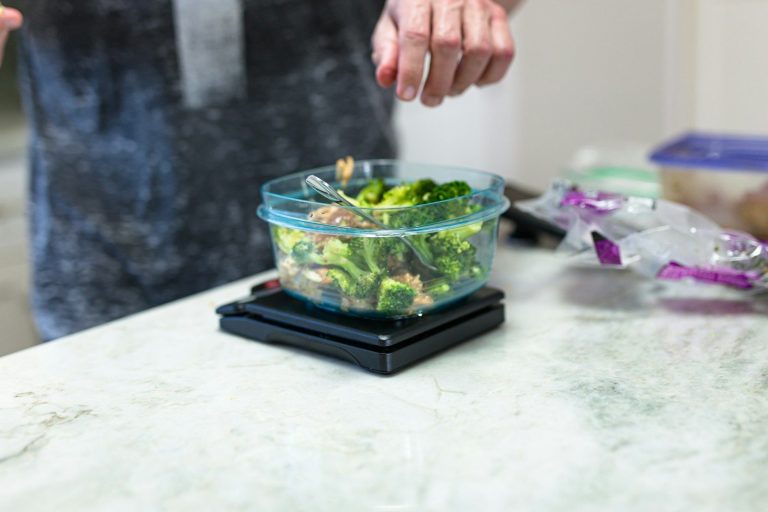
A container of fresh salad on a digital scale being weighed on a kitchen bench.
Weight, appearance, and other physical parameters are assessed against the specification.

Product assessment compares the physical and organoleptic parameters of a product with its specification. Assessment is commonly carried out by trained staff using documented criteria and, where possible, a reference or standard sample. Examples of physical and organoleptic assessment include:

  • Visual checks of appearance, colour, shape, and size;
  • Sensory checks of aroma, flavour, and texture;
  • Weight, volume, and dimension checks;
  • Product temperature checks using a calibrated thermometer;
  • Packaging, seal integrity, labelling, and date coding checks; and
  • Checks for foreign matter and other physical defects.

Staff who conduct sensory assessments should be trained, and should follow hygienic practices so that assessment does not create a food safety risk. Results should be recorded against the specification, with any deviation identified and acted on.

Reviewing Product Assessment and Testing Results

Results should be reviewed promptly by a nominated person who is competent to interpret them. Review generally includes:

  • Comparing each result with the specification and the acceptance criteria defined in advance;
  • Holding product until results are reviewed where required, and releasing product only when results are acceptable;
  • Investigating any out-of-specification result, which may include checking the sample, the method, and the laboratory before retesting or resampling in line with the documented procedure;
  • Identifying the cause of confirmed non-conformance and applying corrective action, including product disposition and, where necessary, recall; and
  • Reviewing results over time to identify trends, so that preventative action can be taken before limits are exceeded.

Results, reviews, and decisions should be recorded and retained as part of the food safety and quality system.

Product Assessment and Testing Development Key Points

  • Product Assessment and Testing programs must be developed to meet relevant Regulatory, Industry, and Customer standards and requirements;
  • The Senior Management of your business facilitate a commitment to ensuring adequate resources to the development of your Product Assessment and Testing program;
  • Should you require additional resources for the development of Product Assessment and Testing program elements, please discuss this with the relevant Senior Management representative;
  • A properly developed Product Assessment and Testing program will provide a strong framework for your business to maintain compliance with relevant Regulatory, Industry, and Customer standards and requirements;
  • A poorly-developed Product Assessment and Testing program will not fully support your business and may contribute to significant non-compliance against Regulatory, Industry, and Customer standards and requirements.

To establish the developed detail in a viewable format to facilitate information.

Documentation

Document: A document provides guidance and/or direction for performing work, making decisions, or rendering judgements that affect the safety or quality of the products or services that customers receive

Documented policies, procedures, work instructions, and schedules form the basis of any food safety and quality management system. The following documentation formats may be considered to ensure ongoing compliance with specified requirements for Product Assessment and Testing:

  • Product Assessment and Testing policy;
  • Product Assessment and Testing development procedures;
  • Product Assessment and Testing implementation procedures and work instructions;
  • Product Assessment and Testing monitoring procedures;
  • Product Assessment and Testing corrective and preventative action procedures;
  • Product Assessment and Testing verification schedule;
  • Product Assessment and Testing verification procedures;
  • Product Assessment and Testing validation schedule;
  • Product Assessment and Testing validation procedures;
  • Product Assessment and Testing training procedures.

If your food business supplies foodstuffs manufactured to a customer’s specifications, it is important to consider any specific Product Assessment and Testing Documentation requirements in relation to their items.

You may wish to visit the Product Assessment and Testing Templates section of haccp.com for examples of Product Assessment and Testing documentation, record, and resource formats commonly applied within food safety and quality systems.

Product Assessment and Testing Documentation Key Points

  • Product Assessment and Testing programs must be documented to meet relevant Regulatory, Industry, and Customer standards and requirements;
  • All documented Product Assessment and Testing program elements must be controlled to ensure compliance;
  • Key documented Product Assessment and Testing program elements should be available to your business team at all times to ensure they can facilitate required tasks;
  • A properly documented Product Assessment and Testing program will provide a strong framework for your business to maintain compliance with relevant Regulatory, Industry, and Customer standards and requirements;
  • A poorly documented Product Assessment and Testing program will not fully support your business and may contribute to significant non-compliance against Regulatory, Industry, and Customer standards and requirements.

To facilitate the application of the documentation.
Implementation

Implementation: Implementation is the application of documented food safety and quality system elements into the actual business operation.

The implementation of Product Assessment and Testing within any food business requires genuine commitment from senior management, staff, and visitors to ensure the nominated goals of implementation are achievable on an ongoing basis. It is a step that requires significant planning and consideration of general and specific food business circumstances to ensure the outcomes of Product Assessment and Testing do not negatively impact the safety and quality of the food items dispatched from the business.

Implementation of Product Assessment and Testing must include a clear definition of responsibilities and authorities for all levels of participation by senior management, staff, and visitors to the site.

When implementing Product Assessment and Testing within a food safety and quality system, you may wish to consider the following requirements before completion:

  • Communication and display of the Product Assessment and Testing policy;
  • Completion of Verification and Validation of Product Assessment and Testing development procedures;
  • Availability of Product Assessment and Testing implementation procedures and work instructions;
  • Availability of Product Assessment and Testing monitoring procedures and record templates where applicable;
  • Availability of Product Assessment and Testing corrective and preventative action procedures and record templates where applicable;
  • Availability of the Product Assessment and Testing verification schedule;
  • Availability of Product Assessment and Testing verification procedures;
  • Availability of the Product Assessment and Testing validation schedule;
  • Availability of Product Assessment and Testing validation procedures;
  • Completion of Product Assessment and Testing training procedures;
  • Completion of product design and development requirements related to Product Assessment and Testing
  • Completion of process design and development requirements related to Product Assessment and Testing;
  • Completion of training for team members who have responsibilities and involvement within Product Assessment and Testing;
  • Completion of competency approval for team members who have responsibilities and involvement within Product Assessment and Testing.

If your food business supplies foodstuffs manufactured to a customer’s specifications, it is important to consider any specific Product Assessment and Testing Implementation requirements in relation to their items.

Product Assessment and Testing Implementation Key Points

  • Product Assessment and Testing programs must be implemented to meet relevant Regulatory, Industry, and Customer standards and requirements;
  • Your Product Assessment and Testing program must be fully implemented as per relevant documented Policies, Procedures, and Work Instructions;
  • The implementation of Product Assessment and Testing requires a commitment to the provision of resources by the Senior Management of your business;
  • A properly implemented Product Assessment and Testing program will provide a strong framework for your business to maintain compliance with relevant Regulatory, Industry, and Customer standards and requirements;
  • A poorly implemented Product Assessment and Testing program will not fully support your business and may contribute to significant non-compliance against Regulatory, Industry, and Customer standards and requirements.

To review, confirm and document evidence of the implementation against documented limits.

Monitor

Monitoring: Monitoring is the act of reviewing and confirming measurable parameters of a defined process or product status.

Monitoring requirements within food industry sectors are generally identified against limits of acceptability defined within HACCP plans, implementation procedures, and work instructions. Monitoring usually includes some element of record-keeping, which may be maintained manually or through digital systems. Records should be controlled and retained as described within the haccp.com Document and Data Control Food Standard Element. It is important to consider that advancements in technology have spawned many systems and processes which are self-monitored and/or self-adjusted when variances are identified. Regardless of the system used, the goal of any monitoring activity is to provide sufficient evidence that any limit of acceptability has been met.

Traditional Product Assessment and Testing monitoring requirements include manual recording and the application of corrective actions when the results of monitoring are found to be outside acceptable limits. Corrective Actions should also generally be strongly linked to the monitoring process where applied to ensure full traceability of the applied actions.

Common monitoring activities and record formats that may apply to Product Assessment and Testing include:

  • Product Assessment Records: Commonly maintained for physical and organoleptic parameters. These generally include product details, including batch and lot codes, and confirmations or non-conformance against the specified parameters for product acceptance;
  • Product Testing Records: Maintained to show the outcomes of analytical testing, usually for microbiological and chemical outcomes. These usually include the testing methods used and the outcomes of testing;
  • Product Testing Log: A summary of Product Testing Records, commonly maintained as a snapshot of testing outcomes over an ongoing timeframe;
  • Laboratory Reports and Certificates of Analysis: Received from in-house or external laboratories and reviewed against the specification before product is released;
  • Retention Sampling Records: Maintained as an inventory of retention samples and the outcomes of Product Assessment and Testing activities. These are commonly linked to Shelf-Life Assessment Records to show product performance from a new product to a product at the end of its shelf life;
  • Shelf-Life Assessment Records: Maintained to show product performance at the end of its shelf life. It is generally anticipated that a product will still meet all nominated microbiological, chemical, physical, and organoleptic criteria up until the end of its shelf life. Samples taken for shelf-life assessment are commonly weighed at the initial storage step and reweighed at the end of shelf life, which provides some evidence that net weights are still appropriate;
  • Test Equipment Calibration Records: Maintained for in-house testing equipment such as pH meters, thermometers, and scales; and
  • Out-of-Specification Investigation Records: Maintained to document the investigation, retesting, decisions, and corrective actions taken when a result is outside the specification.

If your food business supplies foodstuffs manufactured to a customer’s specifications, it is important to consider any specific Product Assessment and Testing Monitoring requirements in relation to their items.

You may wish to visit the Product Assessment and Testing Templates section of haccp.com for examples of Product Assessment and Testing documentation, record, and resource formats commonly applied within food safety and quality systems.

Product Assessment and Testing Monitoring Key Points

  • Monitoring provides real-time confirmation and evidence that your risk-based FS&Q Controls are effectively implemented;
  • Product Assessment and Testing programs must be monitored to meet relevant Regulatory, Industry, and Customer standards and requirements;
  • Monitoring of Product Assessment and Testing must be facilitated as per relevant documented Policies, Procedures, and Work Instructions;
  • Nominated monitoring records for Product Assessment and Testing must be maintained as per relevant documented Policies, Procedures, and Work Instructions;
  • A properly monitored Product Assessment and Testing program will provide a strong framework for your business to maintain compliance with relevant Regulatory, Industry, and Customer standards and requirements;
  • A poorly monitored Product Assessment and Testing program will not fully support your business and may contribute to significant non-compliance against Regulatory, Industry, and Customer standards and requirements.

To apply “real time” interventions to documented monitoring limits.

Corrective Action and Preventative Action

Corrective Action: Corrective action is mandatory action to be taken when a deviation to the Quality System occurs, particularly to a Critical Control Point.

Preventative Action: At any step in the process where a hazard has been identified, preventative action must be put into place to prevent re-occurrence.

Corrective Action and Preventative Action are implemented to ensure identified non-conformance issues are documented, investigated, and rectified within appropriate timeframes. Corrective action is any action applied to regain control over a product, process, policy, or procedure that has been identified as being non-conforming outside nominated limits of acceptability. Preventative action is any action applied to prevent any identified

non-conformance from reoccurring.

The outcomes of corrective and preventative actions should result in regained process control after effective application. Specified corrective actions are commonly linked to the HACCP Plans and the food business certification process.

Below are Corrective Action and Preventative Action examples which may be associated with Product Assessment and Testing related non-conformance:

  • Review of the Product Assessment and Testing policy;
  • Review of Product Assessment and Testing development procedures;
  • Review of Product Assessment and Testing implementation procedures and work instructions;
  • Review of Product Assessment and Testing monitoring procedures;
  • Review of Product Assessment and Testing corrective and preventative action procedures;
  • Review of the Product Assessment and Testing verification schedule;
  • Review of Product Assessment and Testing verification procedures;
  • Review of the Product Assessment and Testing validation schedule;
  • Review of Product Assessment and Testing validation procedures;
  • Review of Product Assessment and Testing training procedures;
  • Retraining in Product Assessment and Testing;
  • Review of management review activities to include Product Assessment and Testing as an agenda item;
  • Initiation of product hold procedures where safety or quality may be compromised, including holding product until out-of-specification results are investigated;
  • Retesting or resampling in line with the documented procedure;
  • Review of the sampling plan and testing frequency;
  • Review of laboratory suitability, including accreditation scope and method equivalence;
  • Initiation of a product recall or product recall procedures where investigations show a substantial safety and/or quality risk to the released product;
  • Contacting stakeholders including customers regarding any confirmed or potential Product Assessment and Testing concerns involving their product.

If your food business supplies foodstuffs manufactured to a customer’s specifications, it is important to consider any specific Product Assessment and Testing Corrective Action requirements in relation to their items.

You may wish to visit the Corrective Action and Preventative Action section of haccp.com for examples of best practice applications for this food safety and quality system element.

Product Assessment and Testing Corrective Action and Preventative Action Key Points

  • The implementation of Corrective Action and Preventative Action provides confidence that your FS&Q Program is effectively implemented and that FS&Q criteria are being met;
  • Where deviations or variations are observed, Corrective Action and Preventative Actions must be facilitated to meet relevant Regulatory, Industry, and Customer standards and requirements;
  • Corrective Action and Preventative Action of Product Assessment and Testing must be facilitated as per relevant documented Policies, Procedures and Work Instructions;
  • Records of Corrective Action and Preventative Action for Product Assessment and Testing must be maintained per relevant documented Policies, Procedures and Work Instructions;
  • Proper application of Corrective Action and Preventative Action for your Product Assessment and Testing program will provide a strong framework for your business to maintain compliance with relevant Regulatory, Industry, and Customer standards and requirements;
  • Poor application of Corrective Action and Preventative Action for your Product Assessment and Testing program will not fully support your business and may contribute to significant non-compliance against Regulatory, Industry, and Customer standards and requirements.

To review and confirm documented monitoring and corrective actions against documented parameters.

Verify

Verification: The act of reviewing, inspecting, testing, checking, auditing, or otherwise establishing and documenting whether items, processes, services, or documents conform to specified requirements.

Verification is the detailed review of all food safety and quality system elements to confirm that they are effectively developed, documented, implemented, monitored, and reviewed. All food safety and quality system elements, including documented policies, procedures, training, HACCP plans, and their operational applications must be verified on an ongoing scheduled basis. The verification process commonly includes a defined schedule for which verification activities are required, how often they are conducted, who is responsible, and detailed documented procedures for each nominated verification activity.

The general goal of an established verification process is to ensure any systemic non-conformance issues are identified and rectified within an appropriate time frame. When non-conformance issues are identified through the verification process, Corrective Actions and Preventative Actions should be implemented to ensure they do not impact the effectiveness of the food safety and quality system.

The following examples of verification activities may apply to Product Assessment and Testing:

  • Review of the Product Assessment and Testing policy;
  • Review of Product Assessment and Testing development procedures;
  • Review of Product Assessment and Testing implementation procedures and work instructions;
  • Review of Product Assessment and Testing monitoring procedures;
  • Review of Product Assessment and Testing monitoring records;
  • Review of Product Assessment and Testing corrective and preventative action procedures;
  • Review of the Product Assessment and Testing verification schedule;
  • Review of Product Assessment and Testing verification procedures;
  • Review of the Product Assessment and Testing validation schedule;
  • Review of Product Assessment and Testing validation procedures;
  • Review of Product Assessment and Testing training procedures;
  • Review of Product Assessment and Testing performance since the last review and historically;
  • Review of testing results and trends against specifications;
  • Confirmation that external laboratories hold current accreditation covering the tests requested;
  • Calibration checks of in-house test equipment;
  • Comparison of split samples between in-house and external laboratories, or participation in proficiency testing, where applicable;
  • Analytical testing of product or process to ensure the effectiveness of Product Assessment and Testing;
  • Inclusion of Product Assessment and Testing as an agenda item within the Management Review Process.

If your food business supplies foodstuffs manufactured to a customer’s specifications, it is important to consider any specific Product Assessment and Testing Verification requirements in relation to their items.

You may wish to visit the Verification Activities section of haccp.com for examples of best practice applications for this food safety and quality system element.

Product Assessment and Testing Verification Key Points

  • Your verification program provides evidence that your FS&Q Controls have worked;
  • Product Assessment and Testing programs must be verified to meet relevant Regulatory, Industry, and Customer standards and requirements;
  • The verification of Product Assessment and Testing must be facilitated as per relevant documented Policies, Procedures, and Work Instructions;
  • Nominated verification records for Product Assessment and Testing must be maintained as per relevant documented Policies, Procedures, and Work Instructions;
  • A properly verified Product Assessment and Testing program will provide a strong framework for your business to maintain compliance with relevant Regulatory, Industry, and Customer standards and requirements;
  • A poorly verified Product Assessment and Testing program will not fully support your business and may contribute to significant non-compliance against Regulatory, Industry, and Customer standards and requirements.

To confirm the documented monitoring or procedural limits.

Validate

Validation: The process of gathering evidence to provide a scientific basis for the documented act of demonstrating that a procedure, process, and activity will consistently lead to the expected results. It often includes the qualification of systems and equipment.

Validation is the provision of evidence to support the limits of control or acceptability for food safety or quality parameters nominated within systemic elements. Limits of control or acceptability are commonly included within documented food safety and quality systems elements such as procedures, HACCP plans, and specifications.

Common sources of validation include regulatory and legislative standards, finished product specifications and customer requirements, industry codes of practice and guidelines, verified and validated research, historical product and process control outcomes, and analytical testing.

The general goal of an established validation process is to ensure any systemic non-conformance issues are identified and rectified within an appropriate time frame. When non-conformance issues are identified through the validation process, corrective actions and preventative actions should be implemented to ensure they do not impact the effectiveness of the food safety and quality system.

Validation activities are commonly defined within the verification schedules and procedures of established food safety and quality management systems.

The following examples may apply to validation of the limits of control or acceptability for Product Assessment and Testing:

  • Confirmation of nominated food safety and food quality control limits for Product Assessment and Testing. These limits may apply to regulatory, industry, customer, or finished product specifications;
  • Confirmation that testing methods are fit for purpose for the product and the criteria being tested;
  • Confirmation that acceptance criteria are justified by regulatory, customer, or scientific requirements;
  • Confirmation of product shelf life through testing; and
  • Confirmation of analytical testing methods being used to confirm the effectiveness of Product Assessment and Testing and ensure the accuracy of outcomes.

If your food business supplies foodstuffs manufactured to a customer’s specifications, it is important to consider any specific Product Assessment and Testing Validation requirements in relation to their items.

You may wish to visit the Validation Activities section of haccp.com for examples of best practice applications for this food safety and quality system element.

Product Assessment and Testing Validation Key Points

  • Your validation program provides evidence that your FS&Q Controls will work;
  • Product Assessment and Testing programs must be validated to meet relevant Regulatory, Industry, and Customer standards and requirements;
  • The validation of Product Assessment and Testing must be facilitated as per relevant documented Policies, Procedures, and Work Instructions;
  • Nominated validation records and supporting documentation for Product Assessment and Testing must be maintained as per relevant documented Policies, Procedures, and Work Instructions;
  • A properly validated Product Assessment and Testing program will provide a strong framework for your business to maintain compliance with relevant Regulatory, Industry, and Customer standards and requirements;
  • A poorly validated Product Assessment and Testing program will not fully support your business and may contribute to significant non-compliance against Regulatory, Industry, and Customer standards and requirements.

Skills, knowledge and competency requirements to facilitate development, documentation, implementation, monitoring, corrective action, verification and validation of every Food Safety and Quality System Element.

Skills and Knowledge

Skills and Knowledge: Skills and knowledge are attributes of human interactions commonly linked to competency within any specified job-related task.

Training and competency requirements for Product Assessment and Testing must be ongoing, including regularly scheduled reviews to ensure the effectiveness of training and competency outcomes.

Team members who have defined responsibilities regarding Product Assessment and Testing should have knowledge including:

  • Basic Product Assessment and Testing requirements;
  • Positive outcomes of Product Assessment and Testing;
  • Negative outcomes of a lack of Product Assessment and Testing;
  • Current Product Assessment and Testing procedures, methods, and techniques;
  • General operational, corporate, and social awareness regarding Product Assessment and Testing;
  • Regulatory, industry, and customer requirements regarding Product Assessment and Testing.

Team members who have defined responsibilities regarding Product Assessment and Testing should have skills including:

  • Competency regarding basic Product Assessment and Testing;
  • Effective application of current Product Assessment and Testing procedures, methods, and techniques;
  • The basic development, documentation, and implementation of HACCP and Prerequisite Programs within the food industry sector.

Team members who have defined responsibilities regarding Product Assessment and Testing should have access to resources including:

  • Product Assessment and Testing training;
  • Product Assessment and Testing associations and events;
  • Regulatory standards, industry and customer information and updates regarding Product Assessment and Testing;
  • Incidents within the food industry sector regarding Product Assessment and Testing;
  • Commitment to Product Assessment and Testing by senior management;
  • Suitably qualified food industry professionals with verified experience in Product Assessment and Testing;
  • Effective communication systems including email, internet, and phone through which Product Assessment and Testing information can be sent and received within suitable timeframes.

If your food business supplies foodstuffs manufactured to a customer’s specifications, it is important to consider any specific Product Assessment and Testing Training, Competency, and Resources requirements in relation to their items.

You may wish to visit the Training, Competency, and Resources section of haccp.com for examples of best practice applications for this food safety and quality system element.

Product Assessment and Testing Training, Skills, and Knowledge Key Points

  • Your Training, Skills, and Knowledge program ensures all participating personnel, visitors, and contractors have the required skills and knowledge to effectively facilitate the requirements of your FS&Q Program;
  • Training, Skills and Knowledge programs for Product Assessment and Testing must be facilitated to meet relevant Regulatory, Industry, and Customer standards and requirements;
  • Training, Skills and Knowledge programs for Product Assessment and Testing must be facilitated as per relevant documented Policies, Procedures, and Work Instructions;
  • Training, Skills, and Knowledge records for Product Assessment and Testing must be maintained as per relevant documented Policies, Procedures, and Work Instructions;
  • Properly applied Training, Skills, and Knowledge programs for Product Assessment and Testing will provide a strong framework for your business to maintain compliance with relevant Regulatory, Industry, and Customer standards and requirements;
  • Poorly applied Training, Skills, and Knowledge programs for Product Assessment and Testing will not fully support your business and may contribute to significant non-compliance against Regulatory, Industry, and Customer standards and requirements.

Share this:

Facebook
Twitter
X
Email