

To define detail, scope and purpose.
To establish the developed detail in a viewable format to facilitate information.
To facilitate the application of the documentation.
Downloading a resource will add this resource to your resource subscriptions. You will be notified of future updates to this resource via email (you may unsubscribe at any time by clicking the unsubscribe link in the email notification, or to unsubscribe immediately from all update notifications, click here)
Downloading a resource will add this resource to your resource subscriptions. You will be notified of future updates to this resource via email (you may unsubscribe at any time by clicking the unsubscribe link in the email notification, or to unsubscribe immediately from all update notifications, click here)
This information can be used to develop food safety and quality programs that meet the requirements of modern Regulatory, Customer and Industry Standards:
When considering the development, documentation, and implementation of High-Risk Management within food safety and quality management systems, the following information should be considered to ensure effective outcomes:
The terms High-Risk and High-Care are often used in conjunction with each other. The two terms are similar in their applications into food businesses; the main difference between the two is the fact that High-Risk is more stringent; High-Risk aims to prevent product contamination by pathogenic microorganisms; High-Care aims to minimise product contamination by pathogenic microorganisms.
High-Risk systems and premises rely on heightened levels of food safety management to achieve the anticipated outcomes of safe foods and rely on the effective development, documentation, and implementation of pre-requisite programs that are genuinely maintained on an ongoing basis. Because of the potential public health risks that can occur from contaminated High-Risk foods, the premises, equipment, and surroundings must be constructed and maintained to a high standard.
Products intended to be consumed as Ready to eat (RTE) or Ready to reheat (RTRH) need to be manufactured within facilities that have specialised controls for microbiological safety. The requirements for High-Risk production facilities should reflect Food Industry ‘Best Practice’, as this reduces risk for consumers, and by proxy, for the businesses manufacturing such products.
Ready-to-eat products are relevant for the application of High-Risk practices due to their status. Ready to reheat items are relevant as consumers may not always follow instructions for storage and use, which can result in foodborne illness.
Procedures for product design and development must be developed, documented, and implemented to ensure the process yields appropriate outcomes. The product design and development should include structured consideration of HACCP, production trials, specifications, packaging, labelling, and shelf-life consideration for microbiological, chemical, physical, and organoleptic parameters including challenge testing where applicable.
It is important to consider within any Product Design and Development flow process that stages are linked in a logical order of dependency. Each stage of the Product Design and Development process contains a set of prescribed and concurrent activities incorporating industry best practices. The activities during a stage are generally run concurrently rather than one after another. This ensures that they are carried out quickly and effectively. Process stages must be cross-functional to allow all areas of the food business to contribute.
When considering the implementation of Product Design and Development elements for High-Risk processes and products, additional emphasis must be placed on the microbiological status of raw materials. This is because the management of microbiological risks within a High-Risk scenario relies heavily on the assumption of microbiological limits of process inputs. A lack of consideration of raw material microbiological status can result in a significant microbiological non-conformance.
As with any risk-based activity, implemented Product Design and Development protocols need to follow the established steps, including Development, Documentation, Implementation, Monitoring, Corrective Action, Verification, Validation and Skills, and Knowledge.
The physical facilities and structure of a food establishment must be properly designed, constructed, installed, operated, and maintained to allow the receival, storage, production, and dispatch of safe food. The design and construction of the premises and the items within it have a direct link to the control of the entry of pests and potentially their harbourage and ability to cause contamination of processes or products. The design and construction of premises and equipment are also directly related to the control of cross-contamination by staff and visitor traffic flows, process flows and waste flows.
Many factors are important to premises and equipment design being supportive of food safety including:
The internal and external design and layout of food establishments should permit good food hygiene practices, including protection against cross-contamination during and between food production operations. This may include a defined one-way product flow, the segregation between high and low-risk areas, and entry to high-risk areas via specially designated and managed changing facilities.
Sanitary facilities such as toilets should not be adjoined to operational areas within any food business. As a minimum, a double door and airlock between the sanitary facilities and low-risk production areas would be acceptable.
Adequate suitably designed and constructed facilities should be provided for cleaning food utensils and equipment. Such facilities should have an adequate supply of hot and cold potable water where required.
High-Risk ‘zones’ within a food business usually refer to the areas of the site flow process following a microbiological kill step. High-Risk based controls are implemented until the foodstuff is fully packaged. Items that undergo a final microbiological kill step or microbiological reduction step while contained within their fully sealed packaging may not be classed as High-Risk.
It is generally considered best practice for High-Risk ‘processes’ to be identified as such within HACCP documentation, such as the process flow diagram. High-Risk ‘zones’ should also be clearly defined within site floor plans and layouts.
Where a food business cannot fully meet the expected requirements for design and construction of High-Risk areas and facilities, the business must provide substantial evidence of effective, validated implementation of microbiological controls.
High-Risk is the more stringent standard. High-Risk status items may be used within a High-Care area because they have had a higher level of microbiological intervention, whereas High-Care status items entering a High-Risk area require additional controls to manage the related risks.
The methods and facilities used to transfer items to and from High-Risk areas require thorough risk assessment to confirm they control microbiological risk. Common methods include:
Where equipment requires settings for the transfer of items from lower risk to High-Risk areas, it is preferable that these settings can be controlled only from the lower risk or the High-Risk side, as defined in the risk assessment. Where a system transfers items through a wall, it should be possible to clean it from both sides.
Adequate and effective storage and work-in-progress facilities must be provided within the High-Risk area for transferred items, particularly where rapid cooling is required to control spore-forming pathogens. Post heat treatment cooling temperature and time profiles must meet legal and product-specific requirements. Validation and verification of transfer methods are required on an ongoing basis. See Validation Activities and Verification Activities.
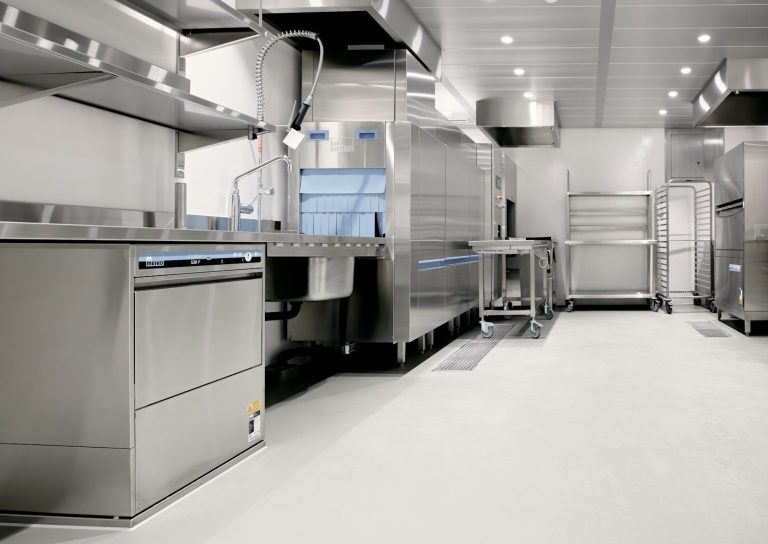
Above and beyond the construction and design requirements of all food businesses, sites facilitating High-Risk processes and products require additional facilities and functions to ensure microbiological risks are controlled. Examples of High-Risk design and construction considerations are provided as follows:
Cleaning and sanitation in High-Risk areas needs additional attention to detail. The principles are set out in Cleaning and Sanitation. The following apply in High-Risk scenarios:
Cleaning schedules for High-Risk areas should specify the areas and items to be cleaned, responsibilities, method and frequency, chemicals and dilution rates, utensils to be used and monitoring arrangements. They should be developed with specialist advice, including from your cleaning chemical suppliers where applicable.
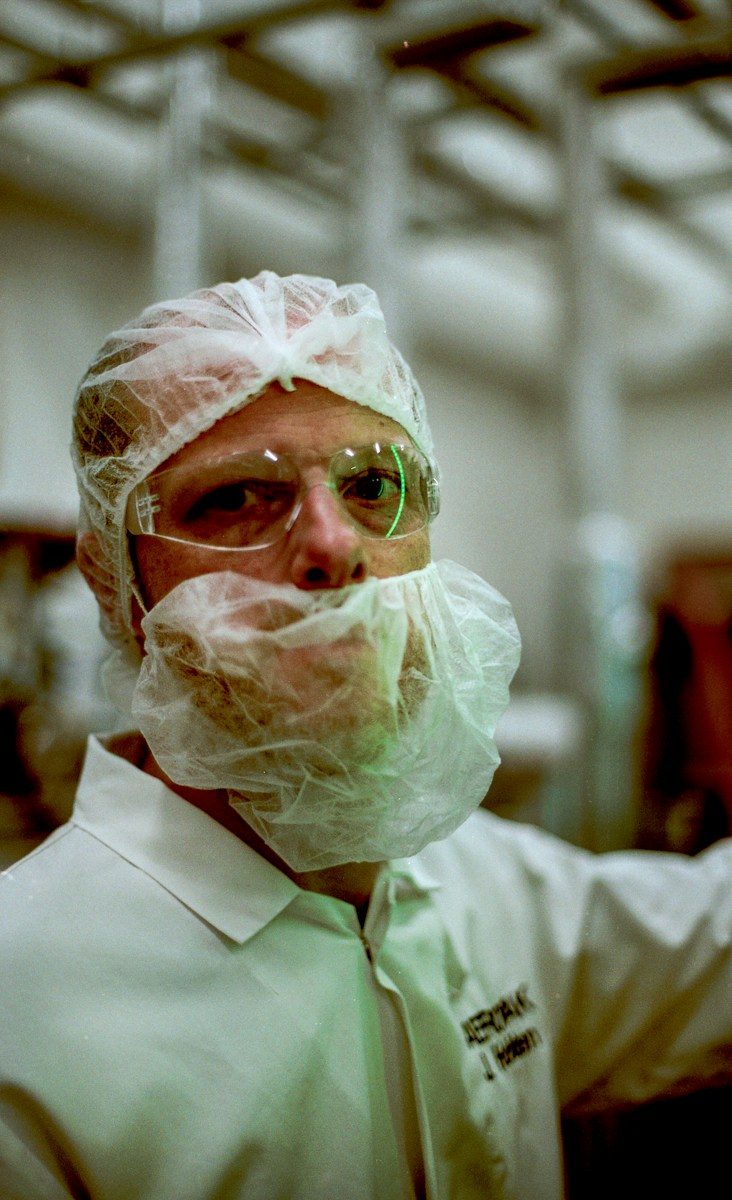
Uniforms, including protective clothing, footwear and headwear, must be suitable for the intended use, made of materials that do not pose a risk to food, and changed into and out of in a designated area. Overalls should not have external pockets and should have cuffed sleeves. General requirements are set out in Personal Hygiene Standards. In High-Risk scenarios:
High-Risk processes may use components that are raw or have not undergone a heat based microbiological reduction step. Where such items are used in a High-Risk environment, confidence in their microbiological safety must be based on risk assessments conducted by a technically competent individual or team. The criteria must address the specific microbiological hazards of each raw material and refer to the raw material specification, including microbiological status and relevant pathogens.
Outcomes must be documented, included in ongoing reviews of raw materials and the approved supplier program, and supported by validation and verification records. These assessments must be completed as part of product design and development, before production trials or receipt of any raw material.
Non-heat-treated items used in High-Risk scenarios should receive more scrutiny at receival and pre-use inspection. This may include:
Waste must not accumulate in food handling, storage or operational areas, and waste areas must be kept clean. Full requirements are set out in Waste and Recyclables Management. High-Risk applications require prompt removal of waste, recyclables and other items that may affect microbiological controls:
Poorly managed waste, particularly outside the premises, can also harbour pests. See Pest and Vermin Control.
Because of the enhanced risk in High-Risk scenarios, everyone entering or working in these areas must be trained and assessed as competent. Training should cover operational tasks as well as entry, exit and transfer to and from High-Risk areas, in addition to hygienic food handling and personal hygiene. General requirements are set out in Training, Competency and Resources Requirements. Management is responsible for ensuring all employees understand the food safety and hygiene practices important to their job.
Chemical use in High-Risk areas must promote food safety as well as the safe use, handling and storage of cleaning, sanitation, pest control and maintenance chemicals. Chemical usage procedures should be documented and available to everyone using chemicals. In High-Risk areas, chemicals should be brought in only as needed, stored away from food and packaging, and clearly labelled when decanted or diluted. See Chemical Control for full requirements.
People who take part in developing, implementing and reviewing HACCP plans and finished product testing need at least a basic understanding of food microbiology. This ensures microbiological hazards are controlled and do not affect the safety or quality of finished food. See Food Microbiology Management.
Pathogens can be transferred between foods by direct contact, food handlers, contact surfaces or air. In High-Risk areas this is controlled by:
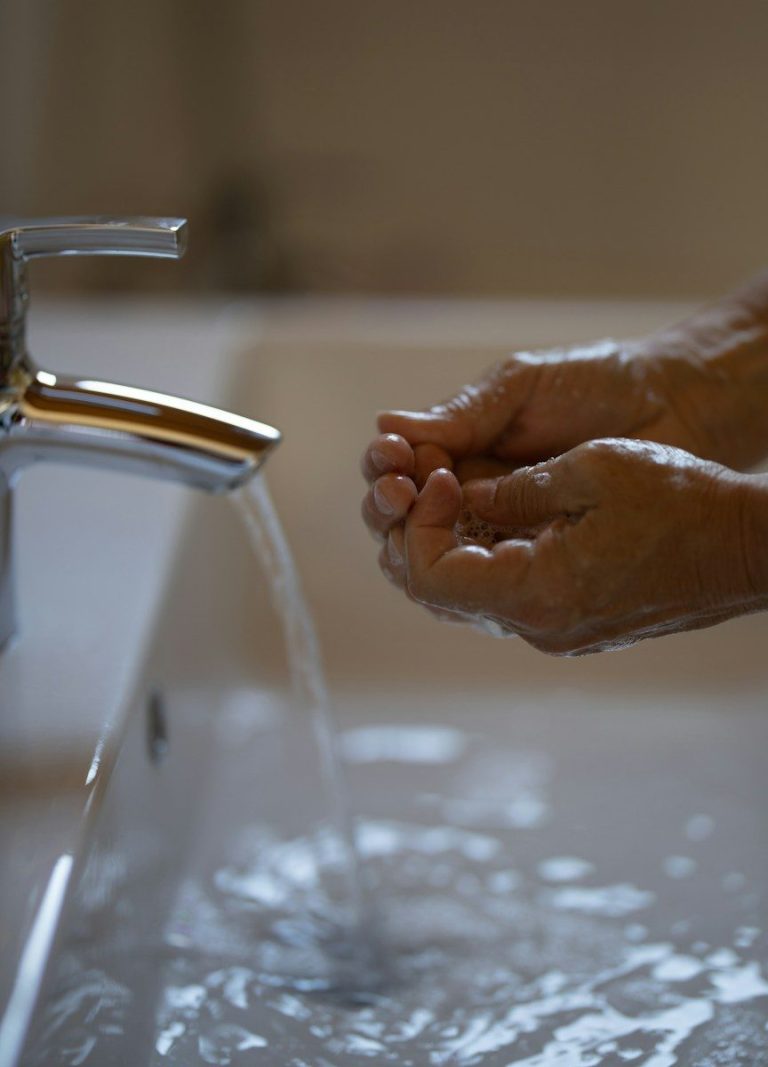
Visitors and contractors, and their actions, are the responsibility of management. Those entering food production areas should wear protective clothing and follow personal hygiene provisions. A documented policy should be given to each visitor and contractor before entry. See Visitor and Contractor Management for full requirements. For High-Risk areas:
For higher risk or larger food businesses, an induction process for visitors and contractors should be developed, documented and implemented. Long term contractors who work unaccompanied should be re-inducted on a schedule, with records kept. Where labour hire companies train staff on the business's behalf, the business should verify and validate the training as part of its approved supplier of service program.
An adequate supply of potable water, with suitable storage, distribution and temperature control, must be available. Potable water meets the criteria of the most recent edition of the World Health Organization Guidelines for Drinking Water Quality, or a higher prescribed standard, and the potability standards of the countries where products are processed and sold. Non-potable water used for fire control, steam production or refrigeration needs a separate, identified system that does not connect with potable water. See Water and Ice Quality Standards.
Only verified potable water should be used in food handling and processing, except for non-food-contact steam, fire control and similar purposes, and certain processes such as chilling or brining where it does not create a hazard. An example is the use of clean seawater in seafood processing. Recirculated water must be treated and maintained so it poses no risk to food, and treatment processes must be documented, monitored, recorded and verified.
Document: A document provides guidance and/or direction for performing work, making decisions, or rendering judgments that affect the safety or quality of the products or services that customers receive.
Documented policies, procedures, work instructions, and schedules form the basis of any food safety and quality management system. The following documentation formats may be considered to ensure ongoing compliance with specified requirements for High-Risk Management:
If your food business supplies foodstuffs manufactured to a customer’s specifications, it is important to consider any specific High-Risk Management Documentation requirements in relation to their items.
You may wish to visit the High-Risk Management Templates section of haccp.com for examples of High-Risk Management documentation, record, and resource formats commonly applied within food safety and quality systems.
Implementation: Implementation is the application of documented food safety and quality system elements into the actual business operation.
The implementation of High-Risk Management within any food business requires genuine commitment from senior management, staff, and visitors to ensure the nominated goals of implementation are achievable on an ongoing basis. It is a step that requires significant planning and consideration of general and specific food business circumstances to ensure the outcomes of High-Risk Management do not negatively impact the safety and quality of the food items dispatched from the business.
Implementation of High-Risk Management must include a clear definition of responsibilities and authorities for all levels of participation by senior management, staff, and visitors to the site.
When implementing High-Risk Management within a food safety and quality system, you may wish to consider the following requirements before completion:
If your food business supplies foodstuffs manufactured to a customer’s specifications, it is important to consider any specific High-Risk Management Implementation requirements in relation to their items.
Monitoring: Monitoring is the act of reviewing and confirming measurable parameters of a defined process or product status.
Monitoring requirements within food industry sectors are generally identified against limits of acceptability defined within HACCP plans, implementation procedures, and work instructions. Monitoring usually includes some element of record-keeping, which may be maintained manually or through digital systems. It is important to consider that advancements in technology have spawned many systems and processes which are self-monitored and/or self-adjusted when variances are identified. Regardless of the system used, the goal of any monitoring activity is to provide sufficient evidence that any limit of acceptability has been met.
Traditional High-Risk Management monitoring requirements include manual recording and the application of corrective actions when the results of monitoring are found to be outside acceptable limits. Corrective Actions should also generally be strongly linked to the monitoring process applied to ensure full traceability of the applied actions.
Common monitoring activities and record formats may apply to High-Risk Management:
You may wish to visit the High-Risk Management Templates section of haccp.com for examples of High-Risk Management documentation, record, and resource formats commonly applied within food safety and quality systems.
Corrective Action: Corrective action is mandatory action to be taken when a deviation to the Quality System occurs, particularly to a Critical Control Point.
Preventative Action: At any step in the process where a hazard has been identified, preventative action must be put into place to prevent re-occurrence.
Corrective Action and Preventative Action are implemented to ensure that any identified non-conformance issues are documented, investigated, and rectified within appropriate time frames. Corrective action is any action applied to regain control over a product, process, policy, or procedure that has been identified as being non-conforming or outside nominated limits of acceptability. Preventative action is any action applied to prevent any identified non-conformance from reoccurring.
The outcomes of corrective and preventative actions should result in regained process control after effective application. Specified corrective actions are commonly linked to the HACCP Plans and the food business certification process.
Below are Corrective Action and Preventative Action examples which may be associated with High-Risk Management related non-conformance:
If your food business supplies foodstuffs manufactured to a customer’s specifications, it is important to consider any specific High-Risk Management Corrective Action requirements in relation to their items.
You may wish to visit the Corrective Action and Preventative Action section of haccp.com for examples of best practice applications for this food safety and quality system element.
Verification: The act of reviewing, inspecting, testing, checking, auditing, or otherwise establishing and documenting whether items, processes, services, or documents conform to specified requirements.
Verification is the detailed review of all food safety and quality system elements to confirm that they are effectively developed, documented, implemented, monitored, and reviewed. All food safety and quality system elements, including documented policies, procedures, training, HACCP plans, and their operational applications must be verified on an ongoing scheduled basis. The verification process commonly includes a defined schedule for which verification activities are required, how often they are conducted, who is responsible, and detailed documented procedures for each nominated verification activity.
The general goal of an established verification process is to ensure any systemic non-conformance issues are identified and rectified within an appropriate time frame. When non-conformance issues are identified through the verification process, Corrective Actions and Preventative Actions should be implemented to ensure they do not impact the effectiveness of the food safety and quality system.
The following examples of verification activities may apply to High-Risk Management:
If your food business supplies foodstuffs manufactured to a customer’s specifications, it is important to consider any specific High-Risk Management Verification requirements in relation to their items.
You may wish to visit the Verification Activities section of haccp.com for examples of best practice applications for this food safety and quality system element.
Validation: The process of gathering evidence to provide a scientific basis for the documented act of demonstrating that a procedure, process, and activity will consistently lead to the expected results. It often includes the qualification of systems and equipment.
Validation is the provision of evidence to support the limits of control or acceptability for food safety or quality parameters nominated within systemic elements. Limits of control or acceptability are commonly included within documented food safety and quality systems elements such as procedures, HACCP plans, and specifications.
Common sources of validation include regulatory and legislative standards, finished product specifications and customer requirements, industry codes of practice and guidelines, verified and validated research, historical product, and process control outcomes, and analytical testing.
The general goal of an established validation process is to ensure any systemic non-conformance issues are identified and rectified within an appropriate time frame. When non-conformance issues are identified through the validation process, Corrective Actions and Preventative Actions should be implemented to ensure they do not impact the effectiveness of the food safety and quality system.
Validation activities are commonly defined within the verification schedules and procedures of established food safety and quality management systems.
The following examples may apply to validation of the limits of control or acceptability for High-Risk Management:
If your food business supplies foodstuffs manufactured to a customer’s specifications, it is important to consider any specific High-Risk Management Validation requirements in relation to their items.
You may wish to visit the Validation Activities section of haccp.com for examples of best practice applications for this food safety and quality system element.
Skills and Knowledge: Skills and knowledge are attributes of human interactions commonly linked to competency within any specified job-related task.
Training and competency requirements for High-Risk Management must be ongoing, including regularly scheduled reviews to ensure the effectiveness of training and competency outcomes.
Team members who have defined responsibilities regarding High-Risk Management should have knowledge including:
Team members who have defined responsibilities regarding High-Risk Management should have skills including:
Team members who have defined responsibilities regarding High-Risk Management should have access to resources including:
If your food business supplies foodstuffs manufactured to a customer’s specifications, it is important to consider any specific High-Risk Management Training, Competency, and Resources requirements in relation to their items.
You may wish to visit the Training, Competency, and Resources section of haccp.com for examples of best practice applications for this food safety and quality system element.