Cleaning and Sanitation

Cleaning and Sanitation Responsibilities, Scheduling, Completion and Records

Last updated: 07/Oct/2026Download this page (PDF)Share this: fXin✉
In this guide
This guide breaks the subject down across the eight Food Safety & Quality system elements below — Development, Documentation, Implementation, Monitoring, Corrective & Preventative Action, Verification, Validation and Training. Select any element to explore detailed, best-practice guidance.

Premium Resources

Download our Premium Cleaning and Sanitation Resources

LOAD ALL

Downloading a resource will add this resource to your resource subscriptions. You will be notified of future updates to this resource via email (you may unsubscribe at any time by clicking the unsubscribe link in the email notification, or to unsubscribe immediately from all update notifications, click here)

To define detail, scope and purpose.

Development

This information can be used to develop food safety and quality programs that meet the requirements of modern Regulatory, Customer and Industry Standards:

  • We take the time to explain the expectations and requirements of food safety and quality compliance as these relate to your food safety and quality programs.
  • You may choose to use our Premium Resources to build, enhance or upgrade your food safety and quality program.
  • We encourage you to share this webpage with any food compliance associates and peers you believe may benefit from our commitment to providing our users with user friendly information and resources to achieve a superior Food Compliance Culture.
  • We welcome your suggestions for additions of general or specific content through the haccp.com Contact Page.

Key Definitions for Cleaning and Sanitation

  • Adenosine triphosphate or ATP: Adenosine triphosphate is a substance present in all cells. ATP is formed when energy is released from food during cell metabolism. ATP bioluminescence is a method commonly used in food businesses to verify the effectiveness of Cleaning and Sanitation activities.
  • Allergen: A normally harmless substance that creates a reaction in the body of a sensitive individual.
  • Cleaning: Cleaning is the removal of dirt, food residues, and other unwanted matter from a surface. Cleanliness is the absence of dirt, including dust, stains, bad smells, and garbage.
  • Cleaning In Place or CIP: A method in which equipment is not fully dismantled, and cleaning and sanitising solutions are circulated through it, usually under pressure.
  • Contact Time: The period for which a detergent or sanitiser must remain in contact with a surface to be effective.
  • Cross Contact: Description of the incidence of allergenic materials becoming part of a foodstuff or process not specified to contain that foodstuff as a declared ingredient.
  • Cross Contamination: Description of the incidence of an unwanted material becoming part of a foodstuff or process.
  • Detergent: A detergent is a synthetic material intended to assist in cleaning, including the removal of dirt and oil. The term is sometimes used to differentiate between soap and other surfactants used for cleaning.
  • Detritus: Detritus is the remains of organic or inorganic materials that have been destroyed or broken up.
  • Disinfection: The destruction of microorganisms on non-living objects using antimicrobial agents. The term is commonly used interchangeably with sanitising.
  • pH: From the potential of Hydrogen. The logarithm of the reciprocal of hydrogen-ion concentration in gram atoms per litre; provides a measure on a scale from 0 to 14 of the acidity or alkalinity of a solution, where 7 is neutral, greater than 7 is more alkaline, and less than 7 is more acidic.
  • Pre-operational Inspection: An inspection completed after cleaning and before production begins, to confirm that premises and equipment have been cleaned and sanitised as specified.
  • Sanitation: Sanitation is the hygienic means of promoting health through the prevention of human contact with, or consumption of, physical, microbiological, or chemical hazards. It also includes the hygienic disposal or recycling of waste.
  • Sanitiser: Sanitisers are antimicrobial agents that are applied to non-living objects to destroy microorganisms, the process of which is also commonly known as disinfection.
  • Swabbing: The use of a swab to sample a surface for microbiological or ATP testing, or to clean sensitive equipment parts.
  • Ware Washing: The cleaning and sanitising of equipment, utensils, and crockery by manual or automated means.
  • Wet Cleaning: Wet cleaning is the most popular method used within the food industry. Detergents and sanitisers are used as part of wet cleaning procedures.

Cleaning and Sanitation Development

When considering the development, documentation, and implementation of Cleaning and Sanitation within food safety and quality management systems, the following information should be considered to ensure effective outcomes:

About Cleaning and Sanitation

Cleaning and sanitation programs are an integral part of any food business, supporting the food safety and quality management system through an established presence within all areas of the premises and surroundings. Cleaning and Sanitation programs should be continually monitored and recorded to ensure their suitability and effectiveness.

The importance of proper cleaning can be appreciated by recognising that contaminated equipment has historically been a major cause of food-borne illness outbreaks (see Food-borne Illness Prevention). Cleaning and sanitation include many individual and complementary operations in every food premises. Cleaning procedures are commonly specific to the type of cleaning necessary. The priority for Cleaning and Sanitation tasks within any food business is for food contact surfaces, premises, equipment, and utensils.

Cleaning and Sanitation Procedures

The goals of Cleaning and Sanitation are to:

  • Remove microorganisms;
  • Remove food and other residues that provide the nutrition for microbiological growth;
  • Remove food residues that could be a food safety or quality hazard as foreign matter if introduced to another food product, including allergens where applicable;
  • Achieve the above goals without contaminating food, for example through cleaning chemical contamination during cleaning and sanitising applications.

Appropriate cleaning and sanitising procedures, in their planning and application, will reduce the risk of cross-contamination of product or process.

Factors in the ability of Cleaning and Sanitation applications to reduce cross-contamination include:

  • Avoiding spraying around unused, uncovered, or uncontained food items or processing equipment;
  • Avoiding the application of chemicals around unused, uncovered, or uncontained food items or processing equipment;
  • Ensuring spills, detritus, and waste are removed regularly on a scheduled basis;
  • Recording Cleaning and Sanitation applications and completions.

Documented cleaning and sanitation procedures need to be in place to monitor and control related issues. This documentation must outline the boundaries that need to be addressed in ensuring safe and quality food production. Cleaning and sanitation procedures need to be developed, documented, and implemented for all areas of consequence to food safety and quality.

Where written cleaning schedules and procedures are used, they should specify:

  • Areas and items to be cleaned and sanitised;
  • Responsibility for particular Cleaning and Sanitation tasks;
  • Method and frequency of Cleaning and Sanitation;
  • Cleaning and Sanitation chemicals to be used and their dilution ratio;
  • Cleaning and Sanitation utensils to be used;
  • Cleaning and Sanitation monitoring arrangements.

Where appropriate, Cleaning and Sanitation programs should be formatted in consultation with relevant specialist expert advisors, including your cleaning and sanitation chemical suppliers where applicable.

Cleaning and Sanitation Duties

There are many cleaning and sanitation tasks that need to be delegated to specific staff within any food business operation. The following sections give an indication of tasks to consider for food handlers and for housekeeping and cleaning staff. Further guidance is available within Good Housekeeping Practices.

Food Handlers

All food handlers may be responsible for the day-to-day cleanliness of the food processing areas in which they work. They may also be responsible for communication with the housekeeping department whenever specific cleaning is required or urgent issues arise. Food handlers must also meet the requirements of Personal Hygiene Standards.

Food handler Cleaning and Sanitation duties may include:

  • Cleaning and sanitising food contact surfaces during, throughout, and at the end of production periods;
  • Cleaning and sanitising small equipment, storage shelving, non-machine equipment, and storage areas in the absence of housekeepers;
  • Cleaning and sanitising equipment including knives and specialist utensils;
  • Any task which is requested by supervisors.

Housekeepers and Cleaning and Sanitation Staff

A mop hanging on a wall beside a yellow bucket, ready for use.
Cleaning equipment should be kept clean, in good repair, and stored in a designated place after use.

Housekeeping and cleaning and sanitation staff are generally employed to carry out general and specific housekeeping duties relating to cleaning and sanitation among other tasks.

Housekeeping and cleaning and sanitation staff duties may include:

  • Cleaning and Sanitation of food contact and non-food contact surfaces during, throughout, and at the end of production periods;
  • Cleaning and Sanitation of processing area equipment, utensils, fixtures, and fittings;
  • Cleaning and Sanitation of all processing area floors, walls, and ceilings;
  • Maintaining waste and recyclable receptacles and the transportation of receptacles and loose waste and recyclables to bulk holding areas;
  • Any task which is requested by food handling staff or supervisors.

The Steps in Cleaning and Sanitation

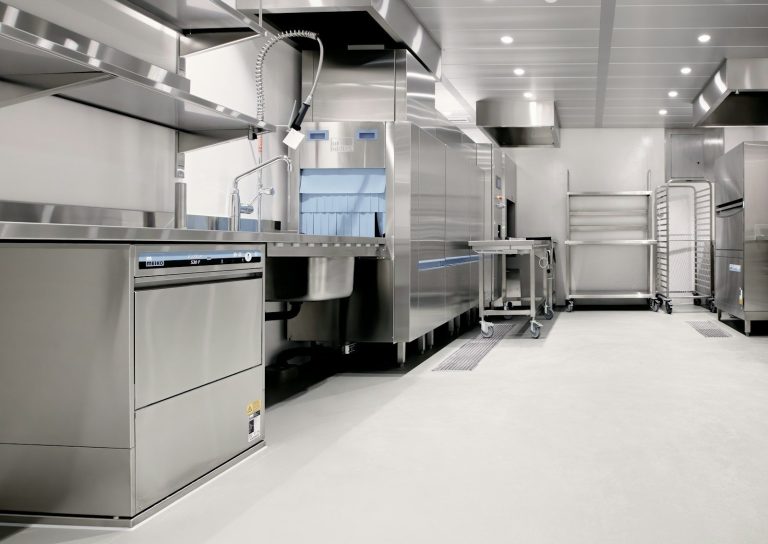
A clean commercial kitchen with stainless steel benches and a ware washing area.
Effective cleaning and sanitation steps leave food preparation areas clean and ready for production.

The following example shows commonly applied cleaning and sanitation, commonly known as wet cleaning:

  • Surface preparation: Involves the removal of loose materials from the surface. This is of obvious benefit to the process, as food substances are removed and cleaning is made easier;
  • Pre-rinse: Using water, preferably hot water under mild pressure, to flush away as much detritus as possible;
  • Cleansing: Detergents are used in their recommended dilution ratios in conjunction with water of an appropriate temperature to remove all of the detritus that is still on the surface to be cleaned;
  • Rinsing: The surfaces are rinsed once again, preferably using hot water under mild pressure, to remove any traces of detritus and detergents. If the detergent is not fully removed, it may reduce the effectiveness of the sanitiser in killing microorganisms;
  • Sanitising: Now that the surface is free from detritus and detergent, an application of sanitiser is made to kill any microorganisms on the surface being cleaned and sanitised;
  • Finishing rinse: A final rinse, preferably using hot water under mild pressure, will remove any sanitiser chemical from the surface, reducing the risk of chemical contamination of foods. Some sanitiser chemicals are specified to be left on the surface rather than being rinsed off.

Cleaned and sanitised equipment and utensils must be:

  • Stored on clean surfaces or in cleaned and sanitised areas; and
  • Handled appropriately to minimise contamination of food contact surfaces.

Chemical Control in Cleaning and Sanitation

The use of chemicals within any food business must include elements that not only promote food safety but also promote the general safe use, handling, and storage of all cleaning, sanitation, pest control, maintenance, and other chemicals. This can generally be facilitated by ensuring procedures for chemical control are documented and available to everyone using chemicals. Further guidance is available within Chemical Control.

Chemical usage procedures may include:

  • Familiarity with the type of chemical being used, including its composition, strength, and associated hazards. This information can generally be gathered from the SDS, labelling, and manufacturer’s instructions. Procedures may include appropriate specifications for use such as “Do not mix with other chemicals” or “Do not add water”;
  • Labelling of decanted, diluted, or prepared chemical mixtures to ensure they are not mistaken for other chemicals;
  • Storing, handling, and using chemicals away from foods, and in a way that prevents the contamination of foods;
  • Defining the responsibility for chemical use;
  • Training and competency verification procedures for team members required to handle or use chemicals.

Chemical Usage Requirements

All pesticides, sanitisers, cleaners, polishes, lubricants, and other toxic and non-toxic chemicals used in the food business must be:

  • Necessary for the operation of the establishment. Unnecessary chemicals should not be found anywhere in the establishment;
  • Used properly according to the manufacturers’ label and SDS instructions;
  • Properly labelled when chemicals are removed from the original container and put into a working container. Food containers should not be used as working containers for chemicals;
  • Considered against the legal requirements for chemical handling and use. The use of some chemicals must only be conducted by specially licensed persons. Legal requirements also commonly include requirements for PPE to be worn.

Chemical Approvals

Food business chemicals must be approved for use in the food establishment. Some products, such as food-grade lubricants, may contain statements by the manufacturer as being approved for use within the food industry or a specific industry sector. Before use within a food business, a confirmation must be received that chemical products are approved for a specific use, and will not potentially contaminate foods. Pesticides and other regulated chemicals must only be applied by persons licensed or certified under local regulatory requirements. Regulatory approvals may also be required for the use of some chemicals within food businesses.

Detergents

There are many different types of cleaning and sanitation chemicals available for use within the food industry. Detergents are used to remove dirt particles. They are not designed to kill microorganisms, although their pH levels can affect microbial growth and survival. Detergents are chemicals that usually contain a surfactant, which makes the removal of dirt from surfaces easier. The most appropriate time to clean surfaces with detergents in solution, or as recommended, is immediately after use. This removes food particles before they harden and become more difficult to remove, and before they support microbial growth. The strength of a detergent regarding its cleaning power is reflected in its alkalinity. The use of hot water as a component of cleaning and sanitising routines, where appropriate, can dramatically improve the capability of the system to control microorganisms.

Sanitisers

Sanitisers are generally not good at removing dirt but do kill microorganisms if used according to the conditions of use. The majority of food poisoning bacteria are killed if they are exposed to heat, chemical sanitisers, or a combination of both. Sodium hypochlorite (chlorine bleach) is one of the most commonly used chemical sanitisers in the food industry today. Commercial bleach typically contains around 10% available chlorine, while the domestic variety is commonly around 4%. High-risk areas to be sanitised should use a solution at a concentration of up to 100 parts per million of available chlorine. Other areas and applications may require a solution of around 50 parts per million. Concentrations should always follow the supplier’s directions and your validated cleaning and sanitation procedures.

Choosing a Detergent or Sanitiser

Chemical sanitising generally requires greater controls than sanitising with hot water or steam. The following factors must be considered to obtain effective sanitation by chemical methods:

  • Amount of water used;
  • pH and hardness of the water: The pH and hardness of the water being used must be determined. Should the water supply be from a municipal supply, the water supplier may adjust the hardness of the water through processing controls. If the water is from other sources, it may need to be tested periodically to ensure ongoing appropriate outcomes. Further guidance is available within Water and Ice Quality Standards;
  • Temperature of the water;
  • Contact time;
  • Concentration or dilution rates: Cleaners and sanitisers should be supplied with a Safety Data Sheet or SDS. This sheet, along with the directions for use on the supplied container or accompanying documentation, will outline the requirements for using the product for its maximum benefit in the cleaning and sanitation process;
  • Exposure time: Detergents and sanitisers need to be exposed to surfaces for long enough to be effective. Exposure times can also be found on the documentation accompanying the product.

The factors that determine the performance of a particular detergent or sanitiser include:

  • The type of substance that is to be removed, as different types of detergents are more adept at removing specific substances. Fats, sugars, and proteins are the three main types of substances that detergents are developed to remove. Dirt reduces a sanitiser’s ability to kill microorganisms because the microorganisms can shelter in and beneath dirt where they are difficult to reach;
  • The water temperature used in conjunction with the detergent or sanitiser: Most detergents and sanitisers are designed to work at their best in either hot or cold water. Using a product as per the manufacturer’s directions will produce the best outcomes in cleaning and sanitising.

Obtaining Correct Chemical Sanitising Ratios

When not using an automated chemical dosing system, chemical sanitiser instructions call for a given amount of chemical sanitiser per litre of water. This ratio of chemical sanitiser to water is important to ensure ongoing appropriate outcomes for the sanitation process.

If manual chemical sanitiser measuring and mixing methods are used, the processes involved must follow procedure and be verified on an ongoing basis.

Staff involved in applications where they are required to manually measure and mix chemicals must be trained and deemed competent in the required tasks.

Cleaning Food Contact Surfaces

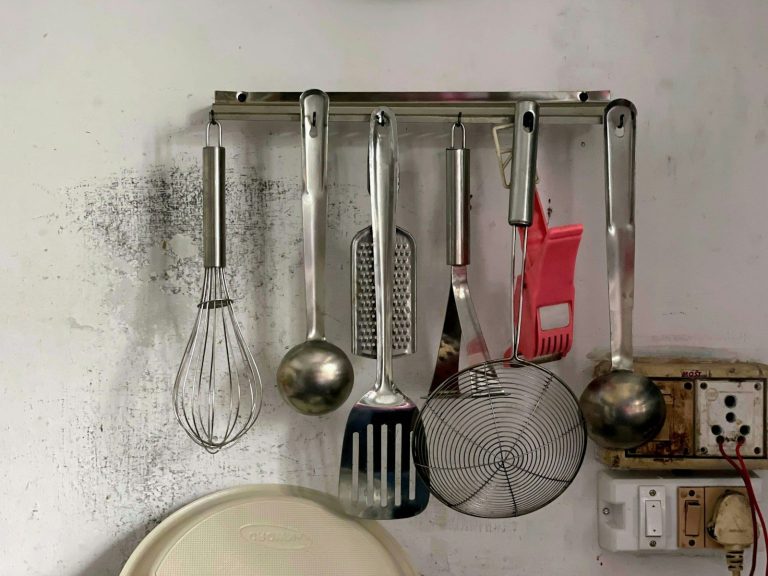
Kitchen utensils hanging from a rail against a wall.
Food contact surfaces such as utensils must be cleaned and sanitised, not just washed until they look clean.

Food contact surfaces of equipment and utensils are the surfaces with which food is normally and expected to come into contact. The effective Cleaning and Sanitation of food contact surfaces, including equipment and utensils, serves two primary purposes:

  • Reduces chances for contaminating safe food during processing, preparation, storage, and service by physically removing soil, bacteria, and other microorganisms; and
  • Minimises the chances of transmitting disease organisms to the consumer by achieving microbiologically safe eating utensils.

Ware washing is a familiar practice, but many people do not understand its principles, or the outcomes where Cleaning and Sanitation are not completed as required. For the most part, chemistry plays a very important part in the cleaning and sanitising process. Washing equipment and utensils until they are visibly clean is not enough to guarantee the production of safe, quality foods.

Cleaning and Sanitising Methods for Food Contact Surfaces

The most common methods used in cleaning and sanitising include:

  • CIP or Cleaning In Place: Equipment is not fully dismantled, but remains as it is while cleaning and sanitising solutions are circulated through it, usually under pressure to help remove the dirt;
  • Manual cleaning: Cleaning using manual methods includes the use of detergent and water, scourers, brushes, and cloths among other utensils. Equipment is usually dismantled to allow for efficiency in cleaning and sanitising procedures;
  • Soaking: Usually applied in conjunction with manual cleaning to remove stubborn substances or stains from items of equipment or utensils;
  • Foaming: Foaming involves the application of a detergent-based foam solution to the item, and rinsing with water after a nominated time limit has passed;
  • High-pressure cleaning: A detergent and water solution is sprayed under high pressure onto the surface to be cleaned. This method is not generally suitable for electrical food processing equipment; it is most often used for cleaning floors and walls;
  • Swabbing method: The swabbing method is commonly used for equipment or fittings which have sensitive parts that may be damaged by other methods such as high-pressure cleaning.

An example of a swabbing process may include the following steps:

  1. Disassemble the equipment;
  2. Rough clean with manual implements or water to remove the majority of food particles;
  3. Detergent wash with water above 40°C (104°F);
  4. Rinse with water;
  5. Apply chemical sanitiser in a suitable solution ratio;
  6. Rinse if required according to the sanitiser instructions, and allow to air dry.

It is highly recommended that specified procedures be followed during Cleaning and Sanitation as part of any effective food safety and quality system.

Special Cleaning and Sanitising

Special cleaning and sanitising should be completed:

  • Each time there is a change in processing between different types of products, considering applicable exceptions;
  • Each time there is a change from raw to ready-to-eat foods;
  • After substantial time interruptions to regular processing;
  • Throughout the production shift as necessary; and
  • After the final use each working shift or shift changeover.

Where bulk water and food transport vehicles are required to undergo Cleaning and Sanitation, the procedure should generally be similar to that used for food processing equipment, commensurate with the materials previously carried by the transport vehicle. Further guidance is available within Transport Standards.

Food processing equipment that requires in-place cleaning should be designed and constructed so that:

  • Cleaning and Sanitation chemical solutions can be circulated throughout a fixed system using an effective Cleaning and Sanitation procedure;
  • Cleaning and Sanitation chemical solutions will contact all food contact surfaces of the system being cleaned;
  • The system is self-draining or capable of being completely drained to remove all residues of the Cleaning and Sanitation chemical solutions used; and
  • The procedures’ outcomes result in thorough Cleaning and Sanitation of the equipment involved.

Equipment used in production-line food processing should undergo Cleaning and Sanitation on a schedule set according to the defined risk levels involved, for example after each use, at the end of each shift, daily, weekly, or as part of periodic deep cleans.

Cleaning Schedules

A cleaning schedule defines what is cleaned, how often, by whom, and how completion is recorded. Schedules should be risk based, with food contact surfaces and higher risk areas cleaned more frequently than lower risk areas such as walls and ceilings.

Cleaning schedules commonly include:

  • Daily tasks, completed during and at the end of production;
  • Weekly tasks, such as storage areas, shelving, and drains;
  • Monthly or periodic deep cleaning tasks, such as ceilings, lights, and inaccessible equipment areas;
  • Event-triggered tasks, such as product changeovers, allergen changes, maintenance work, or contamination incidents.

A master sanitation schedule that lists every area and item, with the method, frequency, responsible person, and verification activity, helps to ensure nothing is missed. Completion should be signed off and reviewed by a supervisor.

Basic Automated Ware Washing Procedure

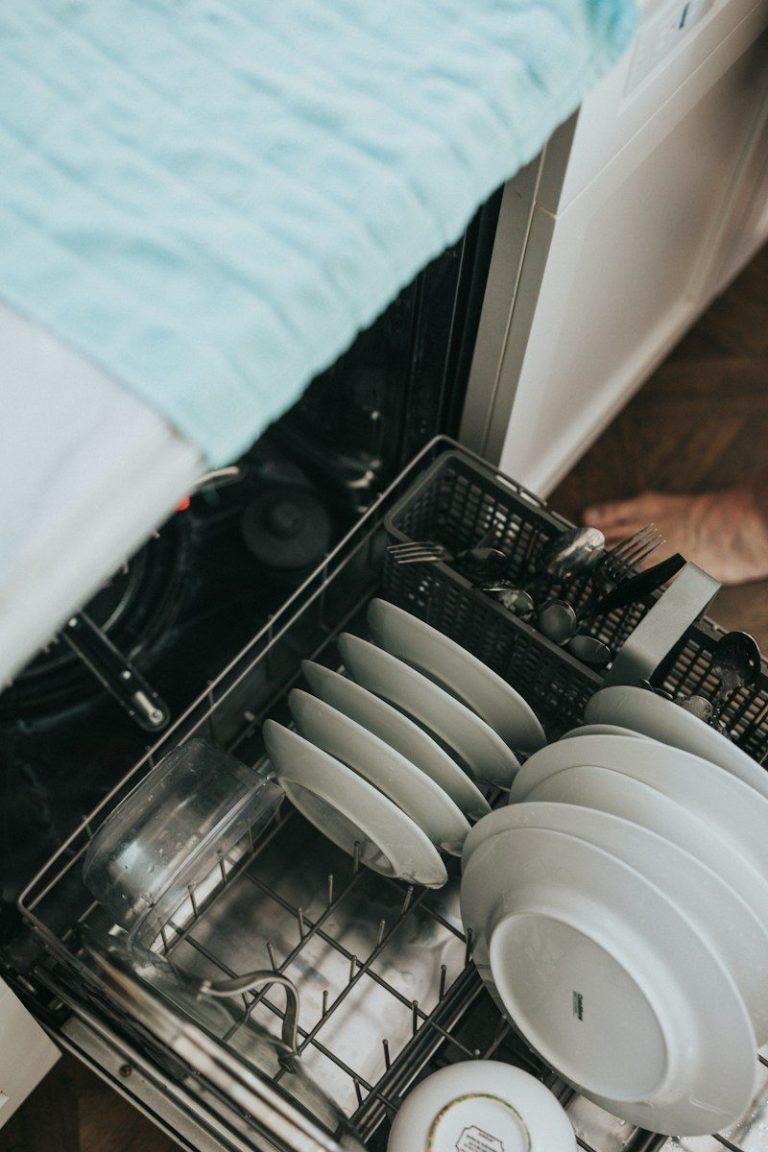
A dishwasher rack loaded with plates and other crockery.
Automated ware washers should be loaded correctly and the finished items inspected before use.

The following logical sequence is an example of a basic automated ware washing procedure:

  • Scrape off any excess waste material into an appropriate collection container;
  • Spray briefly with water to remove any visible waste. This may be done while the items are in a rack;
  • Place the items into the ware washer. Ensure that the temperature of the ware washer is appropriate, as specified by the manufacturer and chemical supplier, before beginning the cycle. Ensure that the attached chemical dispensers or manual chemical well is supplying sufficient chemicals for the washing cycle;
  • Inspect the items once they have finished the entire cycle. They should be visibly clean and not blemished by chemical watermarking;
  • Place the items onto a drainage rack if required. Drainage may not be necessary if the ware washer contains an air-drying blower unit.

Basic Manual Ware Washing Procedures

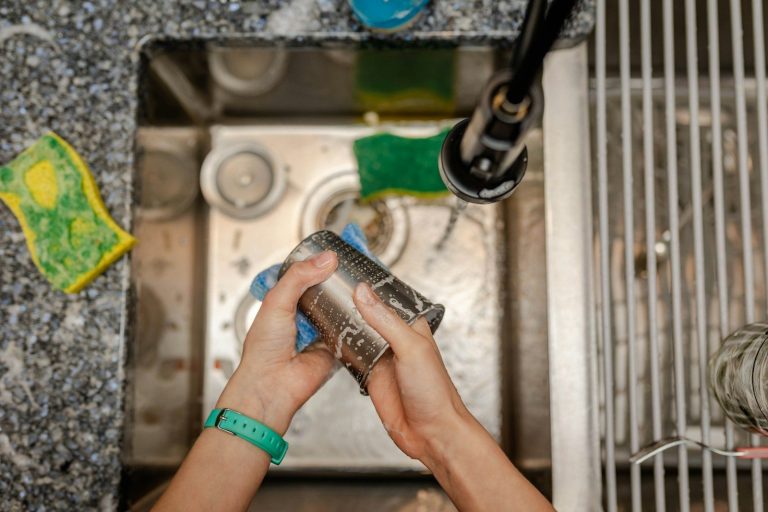
Hands washing a metal item in a stainless steel sink.
Manual ware washing follows a set sequence of scraping, washing, rinsing, sanitising, and air drying.

The following logical sequences are examples of basic manual ware washing procedures:

Three compartment sink method using hot water sanitising:

  • Scrape items;
  • Wash in the detergent solution above 40°C (104°F), or according to detergent specifications;
  • Rinse in clear water;
  • Sanitise in hot water above 75°C (167°F), immersing for at least 30 seconds, or at the temperature and time required by your local regulator;
  • Air dry.

Three compartment sink method using chemical sanitising:

  • Scrape items;
  • Wash in the detergent solution above 40°C (104°F), or according to detergent specifications;
  • Rinse in clear water;
  • Immerse in sanitiser chemical solution at a strength according to sanitiser specifications;
  • Air dry.

Cleaning and Sanitation Considerations

The following points should be considered within the scope of application for any Cleaning and Sanitation activity:

  • Equipment and utensils cleaned before use: Properly cleaned and sanitised equipment and utensils should be microbiologically safe before use. If contamination of cleaned and sanitised items is suspected, the equipment or utensils should not be used until they have undergone Cleaning and Sanitation once again. It is generally not considered appropriate for items such as steel wool or other non-rigid metallic scrubbing devices to be used for cleaning within food businesses due to the risk of product contamination;
  • Soiled equipment and utensils: During storage, handling, and use, equipment and utensils become soiled and contaminated with bacteria. Equipment and utensils should be scheduled for Cleaning and Sanitation on an ongoing basis at predetermined timeframes;
  • Scraping, pre-flushing, and pre-soaking: These are methods for removing detritus from equipment and utensils before Cleaning and Sanitation;
  • Washing: When using appropriate chemicals and cleaning utensils, the washing step removes detritus from equipment and utensils;
  • Rinsing: Rinsing removes most of the suspended detritus, bacteria, and cleaning chemicals from the equipment and utensils. Although the equipment and utensils look visibly clean at this point, they may still be contaminated with bacteria;
  • Sanitising: Sanitising kills the remaining pathogenic organisms on the equipment and utensils. Sanitisation will occur when certain specific chemical and water solution concentrations, temperature requirements, time requirements, and water conditions are met. These conditions are crucial for effective sanitisation, and therefore verification of any Cleaning and Sanitation process is important to ensure the process is effective;
  • Air drying: The most acceptable method of drying equipment and utensils is air drying. The use of towels for drying, polishing, or any other devices can contaminate the equipment and utensils that have just undergone Cleaning and Sanitation;
  • Appropriate storage, handling, and use: Appropriate storage, handling, and use of cleaned and sanitised equipment and utensils are important in preventing the contamination of foodstuffs.

If your food business supplies foodstuffs manufactured to a customer’s specifications, consider any specific Cleaning and Sanitation Development requirements in relation to their items.

Cleaning Tools and Colour Coding

A basket holding brushes, a cloth, a paper towel roll, and a pump bottle of cleaner.
Cleaning tools should be fit for purpose, kept clean, and stored away from food areas.

Cleaning tools such as brushes, brooms, scourers, cloths, and buckets can spread contamination if they are not controlled. Tools should be fit for purpose, kept clean and in good repair, and stored off the floor in a designated area.

Many food businesses use colour coding to separate cleaning tools by area or risk, for example one colour for raw food areas, another for ready-to-eat areas, and another for toilets and amenities. A colour coding chart should be displayed and team members trained in its use.

  • Do not use tools from a high-risk area, such as amenities, in food areas;
  • Replace worn tools that shed bristles or fibres, which may become foreign matter;
  • Clean and sanitise tools after use, and dry them before storage;
  • Dedicate tools to allergen cleaning where required. See Allergen Management.

Pre-operational Inspections and ATP Testing

A pre-operational inspection is completed after cleaning and before production starts, to confirm that premises and equipment are clean, sanitised, and ready for use. Inspections commonly include sensory checks (sight, smell, and touch) and may include verification swabbing.

ATP bioluminescence swabbing gives a rapid indication of residual organic matter on a surface, with results available within minutes. ATP tests do not identify specific microorganisms, so they are commonly used alongside microbiological testing (see Product Assessment and Testing).

  • Define the sites to be swabbed, the frequency, and pass and fail limits;
  • Re-clean and re-swab any failed site before production begins;
  • Record the results and review them for trends.

Assessing and Verifying Cleaning and Sanitation

Determining if equipment, utensils, and the premises have undergone effective Cleaning and Sanitation can be done through a variety of methods including:

  • Sensory inspection: Perhaps the most practised Cleaning and Sanitation verification method, sensory inspection involves using the human senses to confirm that an item has been effectively cleaned and sanitised. Sight, smell, and touch play the main roles in sensory inspection and provide a valued judgement on just how clean and sanitary an item is. This form of assessment usually requires the inspector to be suitably qualified for the task, able to differentiate between clean and unclean, and sanitised and unsanitised, aware of potential trouble areas, and knowledgeable about the appropriate cleaning procedures involved;
  • Microorganism count testing: This method enables microorganism presence to be confirmed. Testing the premises and equipment, or the food produced, can allow determination of whether microorganisms are present by type, and in what quantities, on visually clean surfaces. Microbiological testing gives the most effective assessment of the presence of microorganisms on a surface or in food, but the method is usually expensive and time-consuming in its application.

Cleaning and Sanitation Development Key Points

  • Cleaning and Sanitation programs must be developed to meet relevant Regulatory, Industry, and Customer standards and requirements;
  • The Senior Management of your business is committed to providing adequate resources for the development of your Cleaning and Sanitation program;
  • Should you require additional resources for the development of Cleaning and Sanitation program elements, please discuss this with the relevant Senior Management representative;
  • A properly developed Cleaning and Sanitation program will provide a strong framework for your business to maintain compliance with relevant Regulatory, Industry, and Customer standards and requirements;
  • A poorly developed Cleaning and Sanitation program will not fully support your business and may contribute to significant non-compliance against Regulatory, Industry, and Customer standards and requirements.

To establish the developed detail in a viewable format to facilitate information.

Documentation

Document: A document provides guidance and or direction for performing work, making decisions, or rendering judgements that affect the safety or quality of the products or services that customers receive.

Documented policies, procedures, work instructions, and schedules form the basis of any food safety and quality management system. The following documentation formats may be considered to ensure ongoing compliance with specified requirements for Cleaning and Sanitation:

  • Cleaning and Sanitation policy;
  • Cleaning and Sanitation development procedures;
  • Cleaning and Sanitation implementation procedures and work instructions;
  • Cleaning and Sanitation monitoring procedures;
  • Cleaning and Sanitation corrective and preventative action procedures;
  • Cleaning and Sanitation verification schedule;
  • Cleaning and Sanitation verification procedures;
  • Cleaning and Sanitation validation schedule;
  • Cleaning and Sanitation validation procedures;
  • Cleaning and Sanitation training procedures.

If your food business supplies foodstuffs manufactured to a customer’s specifications, it is important to consider any specific Cleaning and Sanitation Documentation requirements in relation to their items.

You may wish to visit the Cleaning and Sanitation Templates section of haccp.com for examples of Cleaning and Sanitation documentation, record, and resource formats commonly applied within food safety and quality systems.

Cleaning and Sanitation Documentation Key Points

  • Cleaning and Sanitation programs must be documented to meet relevant Regulatory, Industry, and Customer standards and requirements;
  • All documented Cleaning and Sanitation program elements must be controlled to ensure compliance;
  • Key documented Cleaning and Sanitation program elements should be available to your business team at all times to ensure they can facilitate required tasks;
  • A properly documented Cleaning and Sanitation program will provide a strong framework for your business to maintain compliance with relevant Regulatory, Industry, and Customer standards and requirements;
  • A poorly documented Cleaning and Sanitation program will not fully support your business and may contribute to significant non-compliance against Regulatory, Industry, and Customer standards and requirements.

To facilitate the application of the documentation.
Implementation

Implementation: Implementation is the application of documented food safety and quality system elements into the actual business operation.

The implementation of Cleaning and Sanitation within any food business requires genuine commitment from senior management, staff, and visitors to ensure the nominated goals of implementation are achievable on an ongoing basis. It is a step that requires significant planning and consideration of general and specific food business circumstances to ensure the outcomes of Cleaning and Sanitation do not negatively impact the safety and quality of the food items dispatched from the business.

Implementation of Cleaning and Sanitation must include a clear definition of responsibilities and authorities for all levels of participation by senior management, staff, and visitors to the site.

When implementing Cleaning and Sanitation within a food safety and quality system, you may wish to consider the following requirements before completion:

  • Communication and display of the Cleaning and Sanitation policy;
  • Completion of Verification and Validation of Cleaning and Sanitation development procedures;
  • Availability of Cleaning and Sanitation implementation procedures and work instructions;
  • Availability of Cleaning and Sanitation monitoring procedures and record templates where applicable;
  • Availability of Cleaning and Sanitation corrective and preventative action procedures and record templates where applicable;
  • Availability of the Cleaning and Sanitation verification schedule;
  • Availability of Cleaning and Sanitation verification procedures;
  • Availability of the Cleaning and Sanitation validation schedule;
  • Availability of Cleaning and Sanitation validation procedures;
  • Completion of Cleaning and Sanitation training procedures;
  • Completion of product design and development requirements related to Cleaning and Sanitation;
  • Completion of process design and development requirements related to Cleaning and Sanitation;
  • Completion of training for team members who have responsibilities and involvement in Cleaning and Sanitation;
  • Completion of competency approval for team members who have responsibilities and involvement in Cleaning and Sanitation.

If your food business supplies foodstuffs manufactured to a customer’s specifications, it is important to consider any specific Cleaning and Sanitation Implementation requirements in relation to their items.

Cleaning and Sanitation Implementation Key Points

  • Cleaning and Sanitation programs must be implemented to meet relevant Regulatory, Industry, and Customer standards and requirements;
  • Your Cleaning and Sanitation program must be fully implemented as per relevant documented Policies, Procedures, and Work Instructions;
  • The implementation of Cleaning and Sanitation requires a commitment to the provision of resources by the Senior Management of your business;
  • A properly implemented Cleaning and Sanitation program will provide a strong framework for your business to maintain compliance with relevant Regulatory, Industry, and Customer standards and requirements;
  • A poorly implemented Cleaning and Sanitation program will not fully support your business and may contribute to significant non-compliance against Regulatory, Industry, and Customer standards and requirements.

To review, confirm and document evidence of the implementation against documented limits.

Monitor

Monitoring: Monitoring is the act of reviewing and confirming measurable parameters of a defined process or product status.

Monitoring requirements within food industry sectors are generally identified against limits of acceptability defined within HACCP plans, implementation procedures, and work instructions. Monitoring usually includes some element of record-keeping, which may be maintained manually or through digital systems. Advancements in technology have produced many systems and processes that are self-monitored or self-adjusted when variances are identified. Regardless of the system used, the goal of any monitoring activity is to provide sufficient evidence that any limit of acceptability has been met.

Traditional Cleaning and Sanitation monitoring requirements include manual recording and the application of corrective actions when the results of monitoring are found to be outside acceptable limits. Corrective Actions should also generally be strongly linked to the monitoring process where applied to ensure full traceability of the applied actions.

The following examples of monitoring activities and record formats may apply to Cleaning and Sanitation:

  • Pre-operational Inspection Records: These are often scheduled, conducted, and recorded to confirm that the cleaning and sanitation, premises and equipment, and GMP have been completed as specified. Surface microbiological swabbing or other activities such as ATP Bioluminescence swabbing is often used as a verification method within Pre-operational Inspections;
  • Cleaning and Sanitation Completion Records: These are often completed by Cleaning and Sanitation team members as an indication of tasks completed. Cleaning and Sanitation completion reports are also commonly re-verified as elements of the Pre-operational Inspection Records;
  • Approved Chemical Listing: A listing of Chemicals approved for use within a particular Food Business. Listings may be inclusive of elements such as nominated suppliers of each nominated chemical, size, SDS, and Food Grade Confirmation;
  • Chemical Inventory Listing: A perpetual listing of chemicals received at the site, including frequency and amounts of use. Chemical Inventory formats are commonly used to track chemical usage to ensure proper use and financial accountability;
  • Chemical Handling and Usage Training Records: Anyone who participates in any processes involving the handling and or usage of Chemicals should be trained to ensure food safety or quality is not jeopardised through their participation.

If your food business supplies foodstuffs manufactured to a customer’s specifications, it is important to consider any specific Cleaning and Sanitation Monitoring requirements in relation to their items.

You may wish to visit the Cleaning and Sanitation Templates section of haccp.com for examples of Cleaning and Sanitation documentation, record, and resource formats commonly applied within food safety and quality systems.

Cleaning and Sanitation Monitoring Key Points

  • Monitoring provides real-time confirmation and evidence that your risk-based FS&Q Controls are effectively implemented;
  • Cleaning and Sanitation programs must be monitored to meet relevant Regulatory, Industry, and Customer standards and requirements;
  • Monitoring of Cleaning and Sanitation must be facilitated as per relevant documented Policies, Procedures, and Work Instructions;
  • Nominated monitoring records for Cleaning and Sanitation must be maintained as per relevant documented Policies, Procedures, and Work Instructions;
  • A properly monitored Cleaning and Sanitation program will provide a strong framework for your business to maintain compliance with relevant Regulatory, Industry, and Customer standards and requirements;
  • A poorly monitored Cleaning and Sanitation program will not fully support your business and may contribute to significant non-compliance against Regulatory, Industry, and Customer standards and requirements.

To apply “real time” interventions to documented monitoring limits.

Corrective Action

Corrective Action: Corrective action is mandatory action to be taken when a deviation to the Quality System occurs, particularly in relation to a Critical Control Point.

Preventative Action: At any step in the process where a hazard has been identified, preventative action must be put into place to prevent re-occurrence.

Corrective Action and Preventative Action are implemented to ensure that any identified non-conformance issues are documented, investigated and rectified within appropriate timeframes. Corrective action is any action applied to regain control over a product, process, policy or procedure that has been identified as being non-conforming or outside nominated limits of acceptability. Preventative action is any action applied to prevent any identified non-conformance from reoccurring.

The outcomes of corrective and preventative actions should result in regained process control after effective application. Specified corrective actions are commonly linked to the HACCP Plans and to the food business certification process.

Below are Corrective Action and Preventative Action examples which may be associated with Cleaning and Sanitation related non-conformance:

  • Review of the Cleaning and Sanitation policy;
  • Review of Cleaning and Sanitation development procedures;
  • Review of Cleaning and Sanitation implementation procedures and work instructions;
  • Review of Cleaning and Sanitation monitoring procedures;
  • Review of Cleaning and Sanitation corrective and preventative action procedures;
  • Review of the Cleaning and Sanitation verification schedule;
  • Review of Cleaning and Sanitation verification procedures;
  • Review of the Cleaning and Sanitation validation schedule;
  • Review of Cleaning and Sanitation validation procedures;
  • Review of Cleaning and Sanitation training procedures;
  • Re-training in Cleaning and Sanitation;
  • Review of management review activities to include Cleaning and Sanitation as an agenda item;
  • Initiation of product hold procedures where safety or quality may be compromised;
  • Initiation of product recall or product withdrawal procedures where investigations show that there is a substantial safety or quality risk to released product;
  • Contacting stakeholders including customers regarding any confirmed or potential Cleaning and Sanitation concerns involving their product;
  • Any item inspected after it has been cleaned where debris is still present should be re-cleaned prior to operation. Likewise if any of the instantaneous swabbing techniques are used to verify the hygiene of equipment and the swab fails, again the equipment must be re-cleaned and re-swabbed prior to operation.

If your food business supplies foodstuffs manufactured to a customer’s specifications, it is important to consider any specific Cleaning and Sanitation Corrective Action requirements in relation to their items.

You may wish to visit the Corrective Action and Preventative Action section of haccp.com for examples of best practice applications for this food safety and quality system element.

Cleaning and Sanitation Corrective Action and Preventative Action Key Points

  • The implementation of Corrective Action and Preventative Action provides confidence that your FS&Q Program is effectively implemented and that FS&Q criteria is being met;
  • Where deviations or variations are observed, Corrective Action and Preventative Actions must be facilitated to meet relevant Regulatory, Industry, and Customer standards and requirements;
  • Corrective Action and Preventative Action of Cleaning and Sanitation must be facilitated as per relevant documented Policies, Procedures and Work Instructions;
  • Records of Corrective Action and Preventative Action for Cleaning and Sanitation must be maintained as per relevant documented Policies, Procedures and Work Instructions;
  • Proper application of Corrective Action and Preventative Action for your Cleaning and Sanitation program will provide a strong framework for your business to maintain compliance with relevant Regulatory, Industry, and Customer standards and requirements;
  • Poor application of Corrective Action and Preventative Action for your Cleaning and Sanitation program will not fully support your business and may contribute to significant non-compliance against Regulatory, Industry, and Customer standards and requirements.

To review and confirm documented monitoring and corrective actions against documented parameters.

Verify

Verification: The act of reviewing, inspecting, testing, checking, auditing, or otherwise establishing and documenting whether items, processes, services, or documents conform to specified requirements.

Verification is the detailed review of all food safety and quality system elements to confirm that they are effectively developed, documented, implemented, monitored, and reviewed. All food safety and quality system elements, including documented policies, procedures, training, HACCP plans, and their operational applications must be verified on an ongoing scheduled basis. The verification process commonly includes a defined schedule for which verification activities are required, how often they are conducted, who is responsible, and detailed documented procedures for each nominated verification activity.

The general goal of an established verification process is to ensure any systemic non-conformance issues are identified and rectified within an appropriate timeframe. When non-conformance issues are identified through the verification process, Corrective Actions and Preventative Actions should be implemented to ensure they do not impact the effectiveness of the food safety and quality system.

The following examples of verification activities may apply to Cleaning and Sanitation:

  • Review of the Cleaning and Sanitation policy;
  • Review of Cleaning and Sanitation development procedures;
  • Review of Cleaning and Sanitation implementation procedures and work instructions;
  • Review of Cleaning and Sanitation monitoring procedures;
  • Review of Cleaning and Sanitation monitoring records;
  • Review of Cleaning and Sanitation corrective and preventative action procedures;
  • Review of the Cleaning and Sanitation verification schedule;
  • Review of Cleaning and Sanitation verification procedures;
  • Review of the Cleaning and Sanitation validation schedule;
  • Review of Cleaning and Sanitation validation procedures;
  • Review of Cleaning and Sanitation training procedures;
  • Review of Cleaning and Sanitation performance since the last review and historically;
  • Analytical testing of product or process to ensure the effectiveness of Cleaning and Sanitation;
  • Inclusion of Cleaning and Sanitation as an agenda item within the Management Review Process.

Methods for determining whether equipment, utensils, and the premises have undergone effective cleaning and sanitation are described in Assessing and Verifying Cleaning and Sanitation below.

If your food business supplies foodstuffs manufactured to a customer’s specifications, it is important to consider any specific Cleaning and Sanitation Verification requirements in relation to their items.

You may wish to visit the Verification Activities section of haccp.com for examples of best practice applications for this food safety and quality system element.

Cleaning and Sanitation Verification Key Points

  • Your verification program provides evidence that your FS&Q Controls have worked;
  • Cleaning and Sanitation programs must be verified to meet relevant Regulatory, Industry, and Customer standards and requirements;
  • The verification of Cleaning and Sanitation must be facilitated as per relevant documented Policies, Procedures, and Work Instructions;
  • Nominated verification records for Cleaning and Sanitation must be maintained as per relevant documented Policies, Procedures, and Work Instructions;
  • A properly verified Cleaning and Sanitation program will provide a strong framework for your business to maintain compliance with relevant Regulatory, Industry, and Customer standards and requirements;
  • A poorly verified Cleaning and Sanitation program will not fully support your business and may contribute to significant non-compliance against Regulatory, Industry, and Customer standards and requirements.

To confirm the documented monitoring or procedural limits.

Validate

Validation: The process of gathering evidence to provide a scientific basis for the documented act of demonstrating that a procedure, process, and activity will consistently lead to the expected results. It often includes the qualification of systems and equipment.

Validation is the provision of evidence to support the limits of control or acceptability for food safety or quality parameters nominated within systemic elements. Limits of control or acceptability are commonly included within documented food safety and quality systems elements such as procedures, HACCP plans, and specifications.

Common sources of validation include regulatory and legislative standards, finished product specifications and customer requirements, industry codes of practice and guidelines, verified and validated research, historical product, and process control outcomes, and analytical testing.

The general goal of an established validation process is to ensure any inappropriate limits of control or acceptability are identified and rectified within an appropriate timeframe. When non-conformance issues are identified through the validation process, Corrective Actions and Preventative Actions should be implemented to ensure they do not impact the effectiveness of the food safety and quality system.

Validation activities are commonly defined within the verification schedules and procedures of established food safety and quality management systems.

The following examples may apply to validation of the limits of control or acceptability for Cleaning and Sanitation:

  • Confirmation of nominated food safety and food quality control limits for Cleaning and Sanitation. These limits may apply to regulatory, industry, customer, or finished product specifications;
  • Confirmation of analytical testing methods being used to confirm the effectiveness of Cleaning and Sanitation and ensure the accuracy of outcomes.

If your food business supplies foodstuffs manufactured to a customer’s specifications, it is important to consider any specific Cleaning and Sanitation Validation requirements in relation to their items.

You may wish to visit the Validation Activities section of haccp.com for examples of best practice applications for this food safety and quality system element.

Cleaning and Sanitation Validation Key Points

  • Your validation program provides evidence that your FS&Q Controls will work;
  • Cleaning and Sanitation programs must be validated to meet relevant Regulatory, Industry, and Customer standards and requirements;
  • The validation of Cleaning and Sanitation must be facilitated as per relevant documented Policies, Procedures, and Work Instructions;
  • Nominated validation records and supporting documentation for Cleaning and Sanitation must be maintained as per relevant documented Policies, Procedures, and Work Instructions;
  • A properly validated Cleaning and Sanitation program will provide a strong framework for your business to maintain compliance with relevant Regulatory, Industry, and Customer standards and requirements;
  • A poorly validated Cleaning and Sanitation program will not fully support your business and may contribute to significant non-compliance against Regulatory, Industry, and Customer standards and requirements.

Skills, knowledge and competency requirements to facilitate development, documentation, implementation, monitoring, corrective action, verification and validation of every Food Safety and Quality System Element.

Skills and Knowledge

Skills and Knowledge: Skills and knowledge are attributes of human interactions commonly linked to competency within any specific job-related task.

Training and competency requirements for Cleaning and Sanitation must be ongoing, including regular scheduled reviews to ensure the effectiveness of training and competency outcomes.

Team members who have defined responsibilities regarding Cleaning and Sanitation should have knowledge including:

  • Basic Cleaning and Sanitation requirements;
  • Positive outcomes of Cleaning and Sanitation;
  • Negative outcomes of a lack of Cleaning and Sanitation;
  • Current Cleaning and Sanitation procedures, methods, and techniques;
  • General operational, corporate, and social awareness regarding Cleaning and Sanitation;
  • Regulatory, industry, and customer requirements regarding Cleaning and Sanitation.

Team members who have defined responsibilities regarding Cleaning and Sanitation should have skills including:

  • Competency regarding basic Cleaning and Sanitation;
  • Effective application of current Cleaning and Sanitation procedures, methods, and techniques;
  • The basic development, documentation, and implementation of HACCP and Prerequisite Programs within the food industry sector.

Team members who have defined responsibilities regarding Cleaning and Sanitation should have access to resources including:

  • Cleaning and Sanitation training;
  • Cleaning and Sanitation associations and events;
  • Regulatory standards, industry and customer information and updates regarding Cleaning and Sanitation;
  • Incidents within the food industry sector regarding Cleaning and Sanitation;
  • Commitment to Cleaning and Sanitation by senior management;
  • Suitably qualified food industry professionals with verified experience in Cleaning and Sanitation;
  • Effective communication systems including email, internet, and phone through which Cleaning and Sanitation information can be sent and received within suitable timeframes.

If your food business supplies foodstuffs manufactured to a customer’s specifications, it is important to consider any specific Cleaning and Sanitation Training, Competency, and Resources requirements in relation to their items.

You may wish to visit the Training, Competency, and Resources section of haccp.com for examples of best practice applications for this food safety and quality system element.

Cleaning and Sanitation Training, Skills and Knowledge Key Points

  • Your Training, Skills, and Knowledge program ensures all participating personnel, visitors, and contractors have the required skills and knowledge to effectively facilitate the requirements of your FS&Q Program;
  • Training, Skills, and Knowledge programs for Cleaning and Sanitation must be facilitated to meet relevant Regulatory, Industry, and Customer standards and requirements;
  • Training, Skills, and Knowledge programs for Cleaning and Sanitation must be facilitated as per relevant documented Policies, Procedures, and Work Instructions;
  • Training, Skills, and Knowledge records for Cleaning and Sanitation must be maintained as per relevant documented Policies, Procedures, and Work Instructions;
  • Properly applied Training, Skills, and Knowledge programs for Cleaning and Sanitation will provide a strong framework for your business to maintain compliance with relevant Regulatory, Industry, and Customer standards and requirements;
  • Poorly applied Training, Skills, and Knowledge programs for Cleaning and Sanitation will not fully support your business and may contribute to significant non-compliance against Regulatory, Industry, and Customer standards and requirements.

Share this:

Facebook
Twitter
X
Email