Premises Amenities Standards

Facilitating Compliant Amenities for Staff, Visitors and Contractors

Last updated: 16/Oct/2026Download this page (PDF)Share this: fXin✉
In this guide
This guide breaks the subject down across the eight Food Safety & Quality system elements below — Development, Documentation, Implementation, Monitoring, Corrective & Preventative Action, Verification, Validation and Training. Select any element to explore detailed, best-practice guidance.

Premium Resources

Download our Premium Premises Amenities Standards Resources

LOAD ALL

Downloading a resource will add this resource to your resource subscriptions. You will be notified of future updates to this resource via email (you may unsubscribe at any time by clicking the unsubscribe link in the email notification, or to unsubscribe immediately from all update notifications, click here)

To define detail, scope and purpose.

Development

This information can be used to develop food safety and quality programs that meet the requirements of modern Regulatory, Customer and Industry Standards:

  • We take the time to explain the expectations and requirements of food safety and quality compliance as these relate to your food safety and quality programs.
  • You may choose to use our Premium Resources to build, enhance or upgrade your food safety and quality program.
  • We encourage you to share this webpage with any food compliance associates and peers you believe may benefit from our commitment to providing our users with user friendly information and resources to achieve superior Food Compliance Culture.
  • We welcome your suggestions for additions of general or specific content through the haccp.com Contact Page.

Key Definitions for Premises Amenities Standards

  • Amenities: Facilities provided for the welfare or personal hygiene needs of people, including toilets, restrooms, shelter sheds, and provision of drinking water.
  • Handwashing Facility: A basin or station supplied with hot and cold or suitably temperature-controlled water, soap, and a hygienic means of drying hands, used for handwashing only.
  • Personnel Hygiene Facilities: Facilities that allow people to maintain an appropriate degree of personal hygiene and avoid contaminating food, including handwashing facilities, toilets, and changing facilities.
  • Premises: Land and buildings, together with their fixtures and surroundings, used for or in connection with food business activities.
  • Ware Washing: The cleaning and sanitising of utensils, crockery, containers, and other food contact items.

Premises Amenities Standards Development

When considering the development, documentation, and implementation of Premises Amenities Standards within food safety and quality management systems, the following information should be considered to ensure effective outcomes:

About Premises Amenities Standards

All food businesses require adequate amenities and facilities for staff, visitors, and contractors to enable appropriate personal hygiene through the following:

Personnel Hygiene Facilities

Personnel hygiene facilities should be available to ensure that an appropriate degree of personal hygiene can be maintained and to avoid contaminating food. Where appropriate, facilities should include:

  • Adequate means of hygienically washing and drying hands, including washbasins and a supply of hot and cold or suitably temperature-controlled water;
  • Toilets of appropriate hygienic design; and
  • Adequate changing facilities for personnel. Such facilities should be suitably located, designated, and maintained.

Further information regarding personal hygiene can be found within the haccp.com Personal Hygiene Standards Food Standard Element.

Handwashing Facilities

A person washing their hands under a running tap at a clean white basin.
Handwashing facilities must be convenient, unobstructed and used for handwashing only.

Handwashing is essential in preventing the contamination of foodstuffs by pathogenic micro-organisms. Sufficient, convenient, and adequate handwashing facilities must therefore be provided within any food business where food handling, processing, or packaging occurs. The number of handwashing facilities can be determined through consideration of the following:

  • Type of food business;
  • Food operations conducted within the food business;
  • Risk level of the foods and processes involved;
  • Size and configuration of the food business; and
  • The number of staff.

For the most part, the number of handwashing facilities is based on a technical review of proposed plans for new or remodelled food establishments and existing operations, coupled with professional judgement as it relates to convenience, accessibility, and suitability. Existing premises are not exempt: a long-standing operation with insufficient handwashing facilities remains exposed to the risks arising from a lack of facilities, which may result in significant public health issues. Where handwashing facilities in an established food business are not convenient, additional facilities should be fitted.

Handwashing facilities should be located to be convenient at the entries and within the following areas of the food business:

  • Food receival areas;
  • Food storage areas;
  • Food preparation areas;
  • Food processing areas;
  • Foodservice areas;
  • Ware washing areas; and
  • In or adjacent to toilets and other personal hygiene facilities.

Handwashing facilities should be used for handwashing purposes only. Using them for storage, as dump sinks, for utensil and equipment washing, for food preparation, or for any other purpose makes the facility inconvenient for handwashing and can contribute to public health risk.

Restricting easy access to handwashing facilities by placing equipment, containers, or other items in front of them, even temporarily, constitutes a risk because the facility is unavailable when needed. Handwashing facilities should be adequate for handwashing. Adequacy often relates to the following design requirements:

  • Hot and cold or temperature-controlled water supplied through a mixing valve or combination outlet, with the temperature controlled to prevent scalding;
  • Self-closing, slow-closing, or metering taps that provide a flow of water long enough to complete effective handwashing without reactivating the outlet; and
  • Avoidance of steam mixing valves where the water temperature cannot be controlled safely.

In addition, handwashing facilities should be provided with a continuous supply of:

  • Hand soap or similar hand cleanser; and
  • Individual disposable paper towels; or
  • A continuous towel system supplied with a clean towel or another suitable drying device.

Handwashing facilities are also commonly fitted with hand sanitiser to support pathogen reduction on the surfaces of hands. Sanitiser supports, but does not replace, effective handwashing.

Further information regarding the cleaning of facilities can be found within the haccp.com Cleaning and Sanitation Food Standard Element.

Toilet Facilities

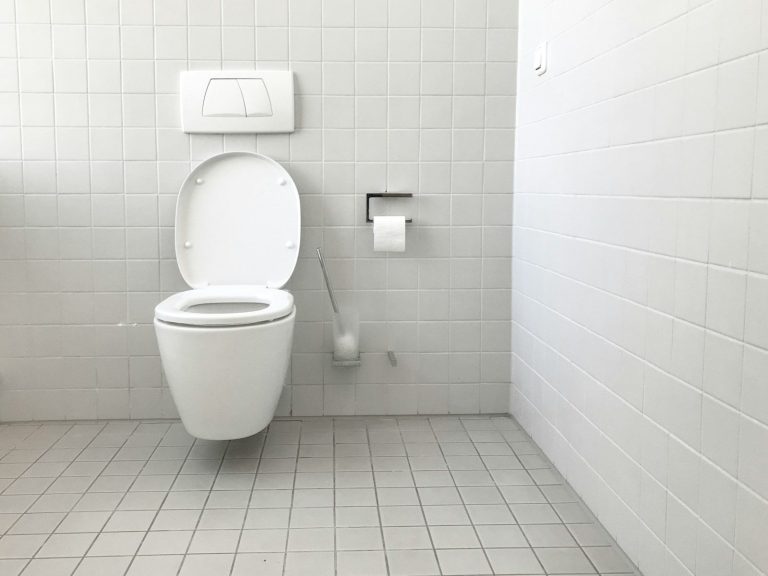
A clean white tiled toilet cubicle with a wall mounted cistern and a toilet tissue holder.
Toilet facilities should be hygienically designed, well supplied and easy to clean.

It is generally accepted that toilet facilities are situated within a reasonable walking distance from food-related activities and should not directly open into food production, handling, or storage areas within a food business. Toilet facilities should:

  • Be provided;
  • Be not less than the number required by relevant legislation. Where no legislated ratio applies, the number of toilets should be nominated and justified against the number of staff, visitors, and contractors on site at any one time. Separate or gender-inclusive provision and ease of access must also be considered;
  • Be conveniently located and accessible to employees at all times;
  • Not be located in areas where they may potentially contaminate foods. Toilets should not open directly into food storage, handling, processing, or packing areas;
  • Be accompanied by appropriately constructed, supplied, and maintained handwashing facilities;
  • Be equipped with suitable sanitary waste storage and disposal facilities commensurate with their intended use;
  • Be of a sanitary design and cleanable; and
  • Be provided with an adequate supply of toilet tissue for each toilet at all times.

Further information regarding the cleaning of toilet facilities can be found within the haccp.com Cleaning and Sanitation Food Standard Element.

Eating and Drinking Areas

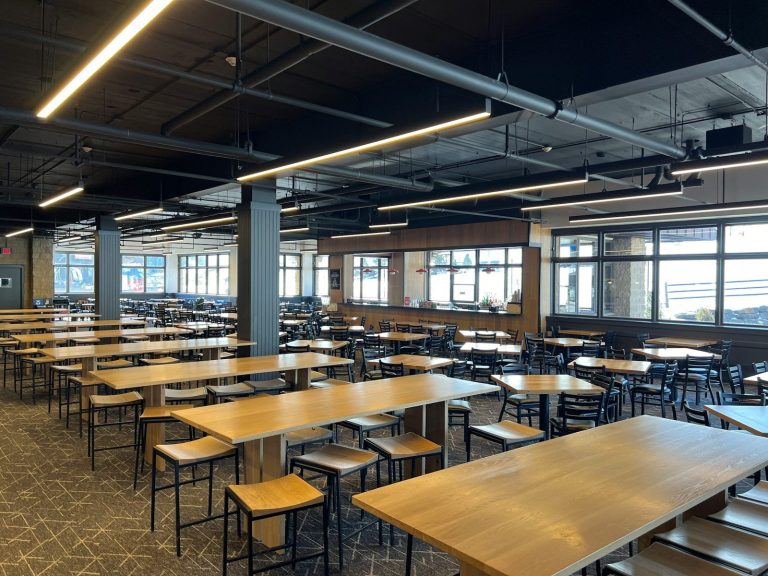
A bright, clean staff dining hall with rows of tables and benches under large windows.
Eating and drinking areas should be clearly defined and kept separate from food handling areas.

Eating and drinking areas within food businesses must be clearly defined and segregated from food processing, packaging, and storage areas. The construction of such areas must be suitable for its intended use and should include basic amenities such as water supply, cleaning, and sanitation facilities, and food storage devices.

Eating and drinking areas should be considered as part of the food business, and therefore should be cleaned, sanitised, protected from pests, well-lit, and maintained appropriately at all times. Waste disposal services must also be provided to eating and drinking areas within the food business.

Further information regarding pest control can be found within the haccp.com Pest and Vermin Control Food Standard Element.

Smoking Areas

Areas for smoking and other activities must be located away from areas in which food handling occurs. Smoking areas should be serviced with waste disposal devices and should be scheduled for cleaning and sanitation on an ongoing basis. It is important to ensure that appropriately constructed and serviced handwashing facilities are provided for people using smoking areas, before entering back into the food business premises.

Storage Areas

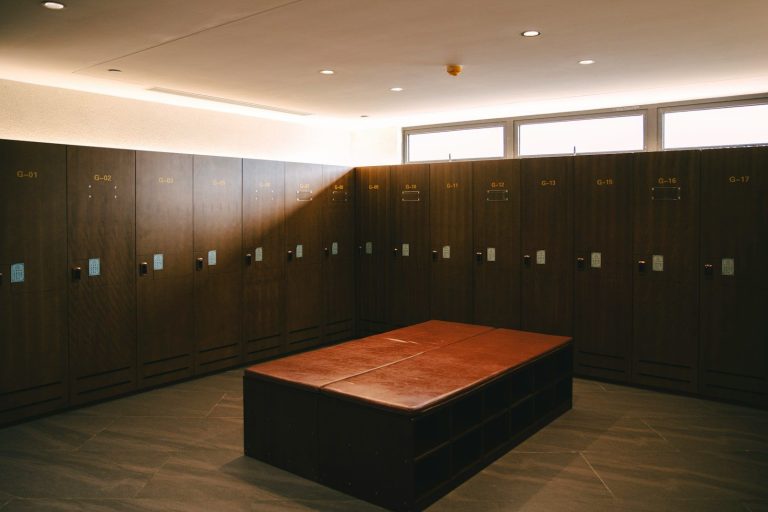
A tidy changing room with dark timber lockers along the walls and a central bench.
Lockers for personal items should be located away from operational areas.

Adequate appropriately constructed and maintained storage facilities should be provided for all staff and visitors to a food business. These must also be located within appropriate areas to ensure contamination of foods does not occur.

For the storage of personal items, storage facilities such as lockers must be located away from operational areas within the food business. Defined requirements for the storage and handling of personal items must be documented and communicated to staff and visitors to ensure ongoing compliance.

Storage facilities must also be provided within operational areas to ensure that items required within operational areas do not contaminate food products.

Further information regarding housekeeping can be found within the haccp.com Good Housekeeping Practices Food Standard Element.

Visitors and Contractors

Visitors and contractors who enter food handling or storage areas must have access to the same standard of amenities as staff and must understand the hygiene rules that apply to the site. The following should generally be considered:

  • Designated, clearly signed toilets and handwashing facilities available to visitors and contractors, accessed without passing through food handling areas;
  • Secure storage for personal items, located away from operational areas;
  • Designated eating, drinking, and smoking areas that are segregated from food handling areas;
  • Induction or briefing on amenity use, handwashing, and personal hygiene rules before entry to the site; and
  • Hygiene requirements for contractors working in or near food handling areas, including clean protective clothing where required.

Further information regarding visitors and contractors can be found within the haccp.com Visitor and Contractor Management Food Standard Element.

The Principles of Food Hygiene

The conditions under which food is handled from the point of production until final consumption determine the quality and safety of the food we eat. The basic rules for the hygienic handling, storage, processing, distribution, and final preparation of all food, along the food production chain, are set out in the Codex Alimentarius General Principles of Food Hygiene. They include requirements for the design and facilities, control of operations including temperature, raw materials, water supply, documentation and recall procedures, maintenance and sanitation, personal hygiene, and training of personnel.

Hygienic practices form an integral part of all food safety management systems, including the Hazard Analysis and Critical Control Point (HACCP) system. The General Principles are recommended for adoption by governments, industry including primary producers, manufacturers, processors, foodservice operators, and retailers, and consumers. The General Principles of Food Hygiene cover all aspects of circumstances that are necessary to ensure the safety and suitability of food at all stages of its handling, processing, storage, and distribution.

The aims of food hygiene are to:

  • Ensure that food is safe to eat at the time of consumption;
  • Prevent food contamination and associated food poisoning; and
  • Facilitate the continuing effective control of food hazards, pests, and other agents likely to contaminate food.

Food hygiene is achieved through effective systems which:

  • Ensure adequate and appropriate maintenance and cleaning and sanitation;
  • Control pests;
  • Manage waste; and
  • Monitor effectiveness of maintenance and sanitation procedures.

If your food business supplies foodstuffs manufactured to a customer’s specifications, it is important to consider any specific Premises Amenities Standards Development requirements in relation to their items.

Premises Amenities Standards Development Key Points

  • Premises Amenities Standards programs must be developed to meet relevant Regulatory, Industry, and Customer standards and requirements;
  • The Senior Management of your business facilitate a commitment to ensuring adequate resources to the development of your Premises Amenities Standards program;
  • Should you require additional resources for the development of Premises Amenities Standards program elements, please discuss this with the relevant Senior Management representative;
  • A properly developed Premises Amenities Standards program will provide a strong framework for your business to maintain compliance with relevant Regulatory, Industry, and Customer standards and requirements;
  • A poorly-developed Premises Amenities Standards program will not fully support your business and may contribute to significant non-compliance against Regulatory, Industry, and Customer standards and requirements.

To establish the developed detail in a viewable format to facilitate information.

Documentation

Document: A document provides guidance and/or direction for performing work, making decisions, or rendering judgments that affect the safety or quality of the products or services that customers receive.

Documented policies, procedures, work instructions, and schedules form the basis of any food safety and quality management system. The following documentation formats may be considered to ensure ongoing compliance with specified requirements for Premises Amenities Standards:

  • Premises Amenities Standards policy;
  • Premises Amenities Standards development procedures;
  • Premises Amenities Standards implementation procedures and work instructions;
  • Premises Amenities Standards monitoring procedures;
  • Premises Amenities Standards corrective and preventative action procedures;
  • Premises Amenities Standards verification schedule;
  • Premises Amenities Standards verification procedures;
  • Premises Amenities Standards validation schedule;
  • Premises Amenities Standards validation procedures;
  • Premises Amenities Standards training procedures.

If your food business supplies foodstuffs manufactured to a customer’s specifications, it is important to consider any specific Premises Amenities Standards Documentation requirements in relation to their items.

You may wish to visit the Premises Amenities Standards Templates section of haccp.com for examples of Premises Amenities Standards documentation, record, and resource formats commonly applied within food safety and quality systems.

Premises Amenities Standards Documentation Key Points

  • Premises Amenities Standards programs must be documented to meet relevant Regulatory, Industry, and Customer standards and requirements;
  • All documented Premises Amenities Standards program elements must be controlled to ensure compliance;
  • Key documented Premises Amenities Standards program elements should be available to your business team at all times to ensure they can facilitate required tasks;
  • A properly documented Premises Amenities Standards program will provide a strong framework for your business to maintain compliance with relevant Regulatory, Industry, and Customer standards and requirements;
  • A poorly documented Premises Amenities Standards program will not fully support your business and may contribute to significant non-compliance against Regulatory, Industry, and Customer standards and requirements.

To facilitate the application of the documentation.
Implementation

Implementation: Implementation is the application of documented food safety and quality system elements into the actual business operation.

The implementation of Premises Amenities Standards within any food business requires genuine commitment from senior management, staff, and visitors to ensure the nominated goals of implementation are achievable on an ongoing basis. It is a step that requires significant planning and consideration of general and specific food business circumstances to ensure the outcomes of Premises Amenities Standards do not negatively impact the safety and quality of the food items dispatched from the business.

Implementation of Premises Amenities Standards must include a clear definition of responsibilities and authorities for all levels of participation by senior management, staff, and visitors to the site.

When implementing Premises Amenities Standards within the food safety and quality system, you may wish to consider the following requirements before completion:

  • Communication and display of the Premises Amenities Standards policy;
  • Completion of Verification and Validation of Premises Amenities Standards development procedures;
  • Availability of Premises Amenities Standards implementation procedures and work instructions;
  • Availability of Premises Amenities Standards monitoring procedures and record templates where applicable;
  • Availability of Premises Amenities Standards corrective and preventative action procedures and record templates where applicable;
  • Availability of the Premises Amenities Standards verification schedule;
  • Availability of Premises Amenities Standards verification procedures;
  • Availability of the Premises Amenities Standards validation schedule;
  • Availability of Premises Amenities Standards validation procedures;
  • Completion of Premises Amenities Standards training procedures;
  • Completion of product design and development requirements related to Premises Amenities Standards;
  • Completion of process design and development requirements related to Premises Amenities Standards;
  • Completion of training for team members who have responsibilities and involvement within Premises Amenities Standards;
  • Completion of competency approval for team members who have responsibilities and involvement within Premises Amenities Standards.

If your food business supplies foodstuffs manufactured to a customer’s specifications, it is important to consider any specific Premises Amenities Standards Implementation requirements in relation to their items.

Premises Amenities Standards Implementation Key Points

  • Premises Amenities Standards programs must be Implemented to meet relevant Regulatory, Industry, and Customer standards and requirements;
  • Your Premises Amenities Standards program must be fully implemented as per relevant documented Policies, Procedures, and Work Instructions;
  • The implementation of Premises Amenities Standards requires a commitment to the provision of resources by the Senior Management of your business;
  • A properly implemented Premises Amenities Standards program will provide a strong framework for your business to maintain compliance with relevant Regulatory, Industry, and Customer standards and requirements;
  • A poorly implemented Premises Amenities Standards program will not fully support your business and may contribute to significant non-compliance against Regulatory, Industry, and Customer standards and requirements.

To review, confirm and document evidence of the implementation against documented limits.

Monitor

Monitoring: Monitoring is the act of reviewing and confirming measurable parameters of a defined process or product status.

Monitoring requirements within food industry sectors are generally identified against limits of acceptability defined within HACCP plans, implementation procedures, and work instructions. Monitoring usually includes some element of record-keeping, which may be maintained manually or through digital systems. It is important to consider that advancements in technology have spawned many systems and processes which are self-monitored and/or self-adjusted when variances are identified. Regardless of the system used, the goal of any monitoring activity is to provide sufficient evidence that any limit of acceptability has been met.

Traditional Premises Amenities Standards monitoring requirements include manual recording and the application of corrective actions when the results of monitoring are found to be outside acceptable limits. Corrective Actions should also generally be strongly linked to the monitoring process where applied to ensure full traceability of the applied actions.

Common monitoring activities and record formats may apply to Premises Amenities Standards:

  • Pre-operational Amenity Inspection Records: These are often scheduled, conducted, and recorded to confirm that toilets, handwashing facilities, eating areas, changing rooms, and lockers are clean, in working order, and available for use before production commences;
  • Handwashing Facility Checks: These confirm that hot and cold or temperature-controlled water, soap, and hygienic drying means are available, that facilities are unobstructed, and that they are used for handwashing only;
  • Amenity Supply Checks: These confirm that toilet tissue, hand soap, paper towels, hand sanitiser, and sanitary waste containers are stocked and serviced;
  • Cleaning and Sanitation Completion Records: These are often completed by Cleaning and Sanitation team members as an indication of tasks completed. Cleaning and Sanitation completion reports are also commonly re-verified as elements of the Pre-operational Amenity Inspection Records;
  • Water Temperature and Pest Activity Checks: These are often recorded as part of routine monitoring of amenity areas; and
  • Routine monitoring of GMP Prerequisite Programs for all food manufacturing premises is recommended. Daily pre-operational checks allow management and staff to ensure that all amenities are cleaned, sanitised, and suitably stocked before the commencement of daily production.

If your food business supplies foodstuffs manufactured to a customer’s specifications, it is important to consider any specific Premises Amenities Standards Monitoring requirements in relation to their items.

You may wish to visit the Premises Amenities Standards Templates section of haccp.com for examples of Premises Amenities Standards documentation, record, and resource formats commonly applied within food safety and quality systems.

Premises Amenities Standards Monitoring Key Points

  • Monitoring provides real-time confirmation and evidence that your risk-based FS&Q Controls are effectively implemented;
  • Premises Amenities Standards programs must be monitored to meet relevant Regulatory, Industry, and Customer standards and requirements;
  • Monitoring of Premises Amenities Standards must be facilitated as per relevant documented Policies, Procedures and Work Instructions;
  • Nominated monitoring records for Premises Amenities Standards must be maintained as per relevant documented Policies, Procedures and Work Instructions;
  • A properly monitored Premises Amenities Standards program will provide a strong framework for your business to maintain compliance with relevant Regulatory, Industry, and Customer standards and requirements;
  • A poorly monitored Premises Amenities Standards program will not fully support your business and may contribute to significant non-compliance against Regulatory, Industry, and Customer standards and requirements.

To apply “real time” interventions to documented monitoring limits.

Corrective Action and Preventative Action

Corrective Action: Corrective action is mandatory action to be taken when a deviation to the Quality System occurs, particularly to a Critical Control Point.

Preventative Action: At any step in the process where a hazard has been identified, preventative action must be put into place to prevent re-occurrence.

Corrective Action and Preventative Action are implemented to ensure that any identified non-conformance issues are documented, investigated, and rectified within appropriate time frames. Corrective action is any action applied to regain control over a product, process, policy, or procedure that has been identified as being non-conforming outside nominated limits of acceptability. Preventative action is any action applied to prevent any identified non-conformance from reoccurring.

The outcomes of corrective and preventative actions should result in regained process control after effective application. Specified corrective actions are commonly linked to the HACCP Plans and the food business certification process.

Below are Corrective Action and Preventative Action examples which may be associated with Premises Amenities Standards related non-conformance:

  • Review of the Premises Amenities Standards policy;
  • Review of Premises Amenities Standards development procedures;
  • Review of Premises Amenities Standards implementation procedures and work instructions;
  • Review of Premises Amenities Standards monitoring procedures;
  • Review of Premises Amenities Standards corrective and preventative action procedures;
  • Review of the Premises Amenities Standards verification schedule;
  • Review of Premises Amenities Standards verification procedures;
  • Review of the Premises Amenities Standards validation schedule;
  • Review of Premises Amenities Standards validation procedures;
  • Review of Premises Amenities Standards training procedures;
  • Re-training in Premises Amenities Standards;
  • Restocking, repair, or cleaning of amenities found to be out of service, unclean, or inadequately supplied;
  • Restricting access to affected amenities until they are corrected;
  • Review of management review activities to include Premises Amenities Standards as an agenda item;
  • Initiation of product hold procedures where safety or quality may be compromised;
  • Initiation of a product recall or product withdrawal procedures where investigations show that there is a substantial safety and/or quality risk to the released product;
  • Contacting stakeholders including customers regarding any confirmed or potential Premises Amenities Standards concerns involving their product.

If your food business supplies foodstuffs manufactured to a customer’s specifications, it is important to consider any specific Premises Amenities Standards Corrective Action requirements in relation to their items.

You may wish to visit the Corrective Action and Preventative Action section of haccp.com for examples of best practice applications for this food safety and quality system element.

Premises Amenities Standards Corrective Action and Preventative Action Key Points

  • The implementation of Corrective Action and Preventative Action provides confidence that your FS&Q Program is effectively implemented and that FS&Q criteria are being met;
  • Where deviations or variations are observed, Corrective Action and Preventative Actions must be facilitated to meet relevant Regulatory, Industry, and Customer standards and requirements;
  • Corrective Action and Preventative Action of Premises Amenities Standards must be facilitated as per relevant documented Policies, Procedures and Work Instructions;
  • Records of Corrective Action and Preventative Action must be maintained for Premises Amenities Standards as per relevant documented Policies, Procedures and Work Instructions;
  • Proper application of Corrective Action and Preventative Action for your Premises Amenities Standards program will provide a strong framework for your business to maintain compliance with relevant Regulatory, Industry, and Customer standards and requirements;
  • Poor application of Corrective Action and Preventative Action for your Premises Amenities Standards program will not fully support your business and may contribute to significant non-compliance against Regulatory, Industry, and Customer standards and requirements.

To review and confirm documented monitoring and corrective actions against documented parameters.

Verify

Verification: The act of reviewing, inspecting, testing, checking, auditing, or otherwise establishing and documenting whether items, processes, services, or documents conform to specified requirements.

Verification is the detailed review of all food safety and quality system elements to confirm that they are effectively developed, documented, implemented, monitored, and reviewed. All food safety and quality system elements, including documented policies, procedures, training, HACCP plans, and their operational applications must be verified on an ongoing scheduled basis. The verification process commonly includes a defined schedule for which verification activities are required, how often they are conducted, who is responsible, and detailed documented procedures for each nominated verification activity.

The general goal of an established verification process is to ensure any systemic non-conformance issues are identified and rectified within an appropriate time frame. When non-conformance issues are identified through the verification process, Corrective Actions and Preventative Actions should be implemented to ensure they do not impact the effectiveness of the food safety and quality system.

The following examples of verification activities may apply to Premises Amenities Standards:

  • Review of the Premises Amenities Standards policy;
  • Review of Premises Amenities Standards development procedures;
  • Review of Premises Amenities Standards implementation procedures and work instructions;
  • Review of Premises Amenities Standards monitoring procedures;
  • Review of Premises Amenities Standards monitoring records;
  • Review of amenity inspection and cleaning records;
  • Observation of handwashing practices and amenity use by team members, visitors, and contractors;
  • Confirmation that the number and location of handwashing facilities and toilets remain adequate for the current number of staff, visitors, and contractors;
  • Review of Premises Amenities Standards corrective and preventative action procedures;
  • Review of the Premises Amenities Standards verification schedule;
  • Review of Premises Amenities Standards verification procedures;
  • Review of the Premises Amenities Standards validation schedule;
  • Review of Premises Amenities Standards validation procedures;
  • Review of Premises Amenities Standards performance since the last review and historically;
  • Analytical testing, such as hand hygiene and surface hygiene swabs, to confirm the effectiveness of Premises Amenities Standards;
  • Inclusion of Premises Amenities Standards as an agenda item within the Management Review Process.

If your food business supplies foodstuffs manufactured to a customer’s specifications, it is important to consider any specific Premises Amenities Standards Verification requirements in relation to their items.

You may wish to visit the Verification Activities section of haccp.com for examples of best practice applications for this food safety and quality system element.

Premises Amenities Standards Verification Key Points

  • Your verification program provides evidence that your FS&Q Controls have worked;
  • Premises Amenities Standards programs must be verified to meet relevant Regulatory, Industry, and Customer standards and requirements;
  • The verification of Premises Amenities Standards must be facilitated as per relevant documented Policies, Procedures and Work Instructions;
  • Nominated verification records for Premises Amenities Standards must be maintained as per relevant documented Policies, Procedures, and Work Instructions;
  • A properly verified Premises Amenities Standards program will provide a strong framework for your business to maintain compliance with relevant Regulatory, Industry, and Customer standards and requirements;
  • A poorly verified Premises Amenities Standards program will not fully support your business and may contribute to significant non-compliance against Regulatory, Industry, and Customer standards and requirements.

To confirm the documented monitoring or procedural limits.

Validate

Validation: The process of gathering evidence to provide a scientific basis for the documented act of demonstrating that a procedure, process, and activity will consistently lead to the expected results. It often includes the qualification of systems and equipment.

Validation is the provision of evidence to support the limits of control or acceptability for food safety or quality parameters nominated within systemic elements. Limits of control or acceptability are commonly included within documented food safety and quality systems elements such as procedures, HACCP plans, and specifications.

Common sources of validation include regulatory and legislative standards, finished product specifications and customer requirements, industry codes of practice and guidelines, verified and validated research, historical product, and process control outcomes, and analytical testing.

The general goal of an established validation process is to ensure any systemic non-conformance issues are identified and rectified within an appropriate time frame. When non-conformance issues are identified through the validation process, Corrective Actions and Preventative Actions should be implemented to ensure they do not impact the effectiveness of the food safety and quality system. Validation activities are commonly defined within the verification schedules and procedures of established food safety and quality management systems.

The following examples may apply to validation of the limits of control or acceptability for Premises Amenities Standards:

  • Confirmation of nominated food safety and food quality control limits for Premises Amenities Standards. These limits may apply to regulatory, industry, customer, or finished product specifications;
  • Confirmation that the number and location of handwashing facilities and toilets are justified against legislative requirements and a documented risk assessment;
  • Confirmation that handwashing facility design, including water temperature and drying methods, supports effective handwashing; and
  • Confirmation of analytical testing methods being used to confirm the effectiveness of Premises Amenities Standards and ensure the accuracy of outcomes.

If your food business supplies foodstuffs manufactured to a customer’s specifications, it is important to consider any specific Premises Amenities Standards Validation requirements in relation to their items.

You may wish to visit the Validation Activities section of haccp.com for examples of best practice applications for this food safety and quality system element.

Premises Amenities Standards Validation Key Points

  • Your validation program provides evidence that your FS&Q Controls will work;
  • Premises Amenities Standards programs must be validated to meet relevant Regulatory, Industry, and Customer standards and requirements;
  • The validation of Premises Amenities Standards must be facilitated as per relevant documented Policies, Procedures and Work Instructions;
  • Nominated validation records and supporting documentation for Premises Amenities Standards must be maintained as per relevant documented Policies, Procedures, and Work Instructions;
  • A properly validated Premises Amenities Standards program will provide a strong framework for your business to maintain compliance with relevant Regulatory, Industry, and Customer standards and requirements;
  • A poorly validated Premises Amenities Standards program will not fully support your business and may contribute to significant non-compliance against Regulatory, Industry, and Customer standards and requirements.

Skills, knowledge and competency requirements to facilitate development, documentation, implementation, monitoring, corrective action, verification and validation of every Food Safety and Quality System Element.

Skills and Knowledge

Skills and Knowledge: Skills and knowledge are attributes of human interactions commonly linked to competency within any specified job-related task.

Training and competency requirements for Premises Amenities Standards must be ongoing, including regularly scheduled reviews to ensure the effectiveness of training and competency outcomes.

Team members who have defined responsibilities regarding Premises Amenities Standards should have knowledge including:

  • Basic Premises Amenities Standards requirements;
  • Positive outcomes of Premises Amenities Standards;
  • Negative outcomes of a lack of Premises Amenities Standards;
  • Current Premises Amenities Standards procedures, methods, and techniques;
  • General operational, corporate, and social awareness regarding Premises Amenities Standards;
  • Hygiene rules applying to amenities and to eating, drinking, and smoking areas; and
  • Regulatory, industry, and customer requirements regarding Premises Amenities Standards.

Team members who have defined responsibilities regarding Premises Amenities Standards should have skills including:

  • Competency regarding basic Premises Amenities Standards;
  • Effective handwashing technique and correct use of amenities;
  • Effective application of current Premises Amenities Standards procedures, methods, and techniques;
  • The basic development, documentation, and implementation of HACCP and Prerequisite Programs within the food industry sector.

Team members who have defined responsibilities regarding Premises Amenities Standards should have access to resources including:

  • Premises Amenities Standards training, including induction for visitors and contractors;
  • Premises Amenities Standards associations and events;
  • Regulatory standards, industry and customer information and updates regarding Premises Amenities Standards;
  • Incidents within the food industry sector regarding Premises Amenities Standards;
  • Commitment to Premises Amenities Standards by senior management;
  • Suitably qualified food industry professionals with verified experience in Premises Amenities Standards;
  • Effective communication systems including email, internet, and phone through which Premises Amenities Standards information can be sent and received within suitable timeframes.

If your food business supplies foodstuffs manufactured to a customer’s specifications, it is important to consider any specific Premises Amenities Standards Training, Competency, and Resources requirements in relation to their items.

You may wish to visit the Training, Competency, and Resources section of haccp.com for examples of best practice applications for this food safety and quality system element.

Premises Amenities Standards Training, Skills, and Knowledge Key Points

  • Your Training, Skills, and Knowledge program ensures all participating personnel, visitors, and contractors have the required skills and knowledge to effectively facilitate the requirements of your FS&Q Program;
  • Training, Skills and Knowledge programs for Premises Amenities Standards must be facilitated to meet relevant Regulatory, Industry, and Customer standards and requirements;
  • Training, Skills and Knowledge programs for Premises Amenities Standards must be facilitated as per relevant documented Policies, Procedures, and Work Instructions;
  • Training, Skills, and Knowledge records for Premises Amenities Standards must be maintained as per relevant documented Policies, Procedures and Work Instructions;
  • Properly applied Training, Skills and Knowledge programs for Premises Amenities Standards will provide a strong framework for your business to maintain compliance with relevant Regulatory, Industry, and Customer standards and requirements;
  • Poorly applied Training, Skills, and Knowledge programs for Premises Amenities Standards will not fully support your business and may contribute to significant non-compliance against Regulatory, Industry, and Customer standards and requirements.

Share this:

Facebook
Twitter
X
Email